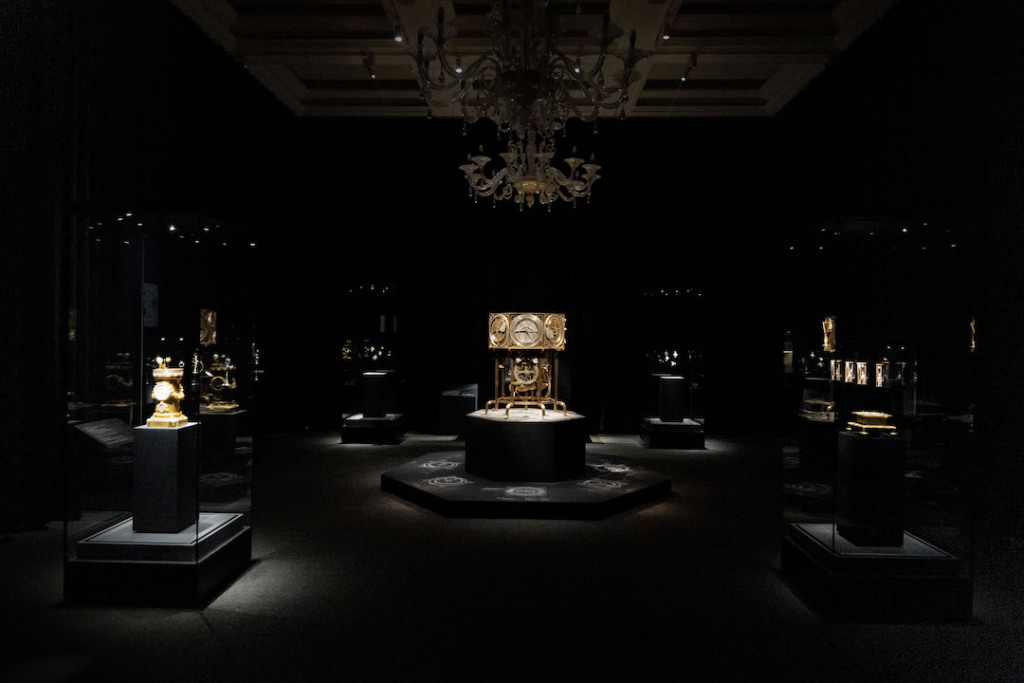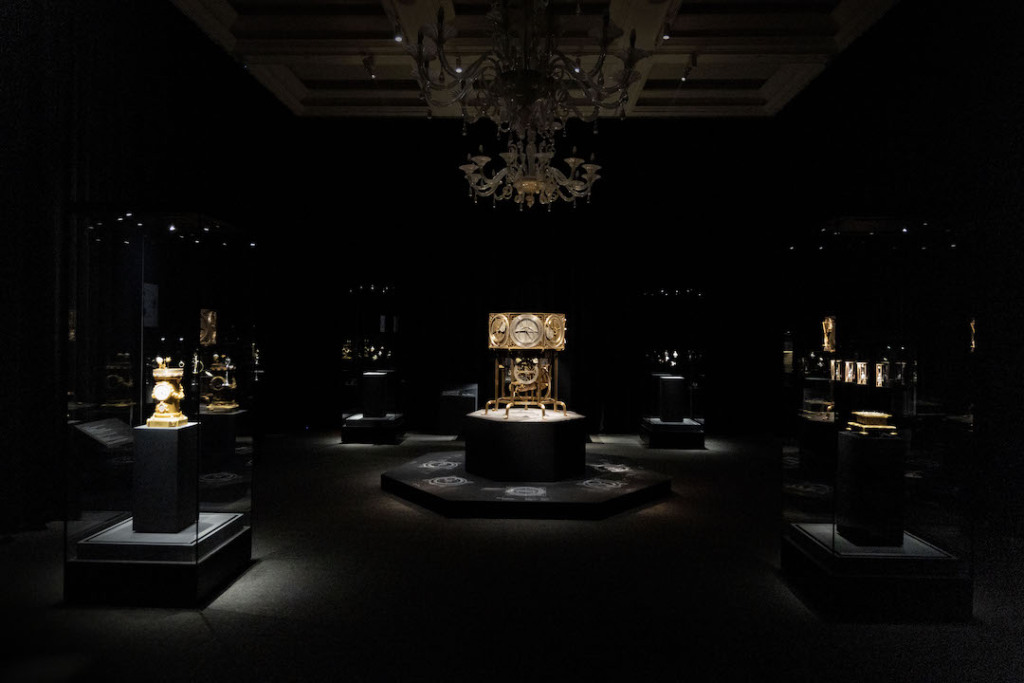
An exhibition themed around "time" and centered around clocks is about to open to the public in a 170-year-old historical building on the Bund in Shanghai.
The Paper has learned that the exhibition "The Beauty of Life: The Art Beyond Timepieces" will open to the public at No. 1 Bund Source in Shanghai on December 8th. From medieval tower clocks and astrolabes to Renaissance astronomical clocks and marine chronometers, from vintage pocket watches to fashionable wristwatches, the exhibition immerses visitors in the precision of mechanics, the ingenuity of technology, and the boundless imagination of art. The exhibition brings together 160 timepieces spanning 700 years of civilization, making it the largest and most comprehensive exhibition of world timepiece culture in China to date. Among them, 115 exhibits are leaving Switzerland for the first time, a truly rare opportunity.
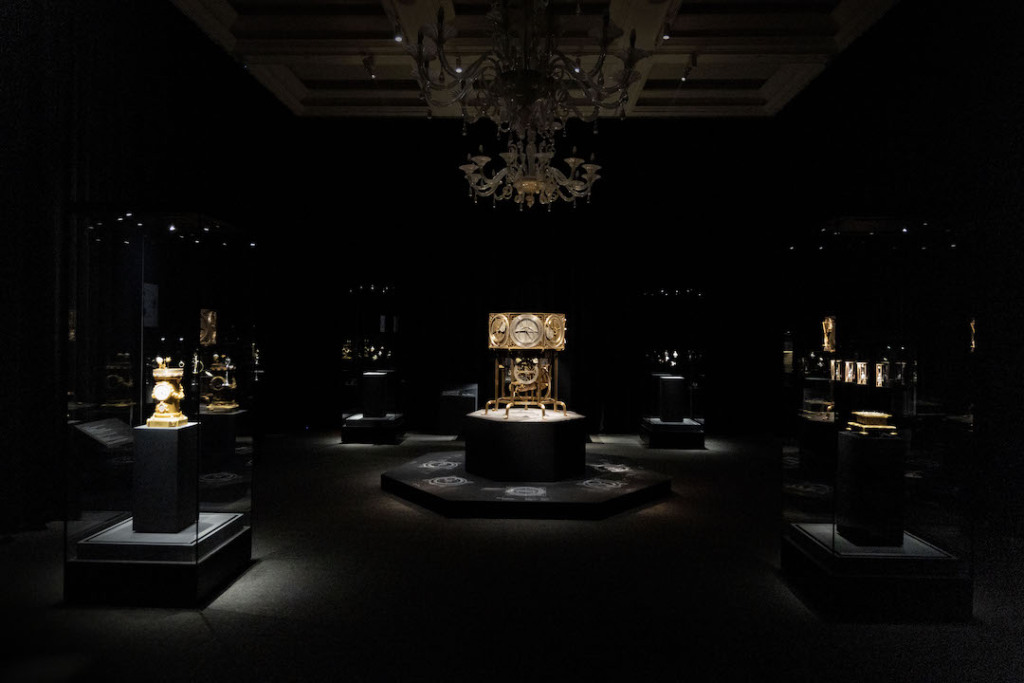
Exhibition site

Outstanding historical building, Bund Source No. 1
La Chaux-de-Fonds, located in the Swiss Jura Mountains, is a UNESCO World Heritage Site known as the "Watchmaking Capital." The Musée International d'Horlogerie (MIH), situated here, is one of Switzerland's most important watchmaking museums and a global landmark of watchmaking culture. The museum's origins can be traced back to a watchmaking school established in 1865, whose professional collection was initially used for teaching purposes. It was officially established in 1902 and moved to its current location—an unassuming concrete building—between 1972 and 1974. The museum boasts an extremely rich collection, covering the complete history of watchmaking, from medieval tower clocks, astrolabes, and nautical chronometers to modern wristwatches.
According to Wang Ruhui, the curator of the exhibition, the exhibition does not only focus on the precise measurement of "time", but attempts to return to the source of the question - how exactly does time shape civilization? Therefore, the exhibition will construct a cultural narrative spanning seven hundred years of changes in the concept of time from multiple perspectives, including the history of technology, art history, astronomy, philosophy, anthropology and cultural transmission.
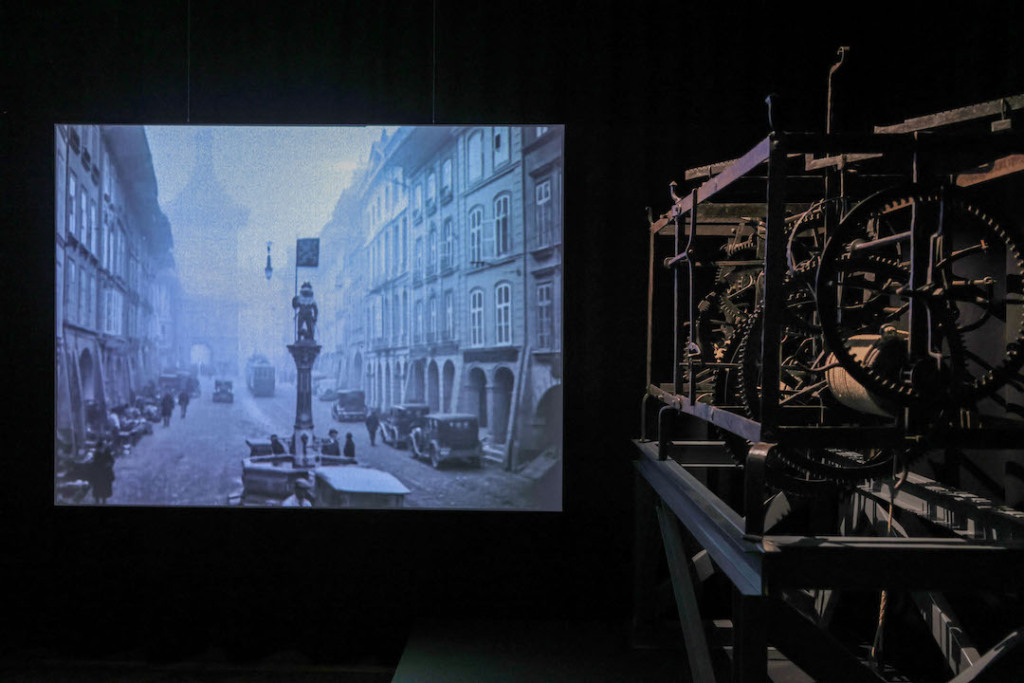
Exhibition site
Upon entering the exhibition hall, the dim lighting could not conceal the cold, gleaming light emanating from the dynamic mechanical devices. From medieval tower clocks and Renaissance astronomical clocks to wristwatches that have traveled to the Mariana Trench and the moon, the dazzling exhibition hall encapsulates the most distant frontiers of the world that human bodies and imaginations have been able to reach throughout history and across the globe.
The exhibition is divided into six sections: "From Sacred Time to Secular Time", "Whispers of Microcosms", "Conquering Time", "'Fashion' Statement", "Magical Wonders", and "'Chinese' Stories".
The exhibition's narrative unfolds from the formation of the concept of time. Time was initially linked to celestial phenomena and the order of the universe, with the cycles of the sun, moon, and stars constituting humanity's earliest time system. With the advent of mechanical tower clocks in the fourteenth century, time transitioned from a sacred, natural celestial trajectory into the framework of social systems and urban order, becoming a fundamental structure of modern society. The exhibition, through a series of early mechanical tower clock models, religious clocks, and Renaissance astronomical devices, presents how time fell from the sky into the streets, becoming the starting point of "public time."
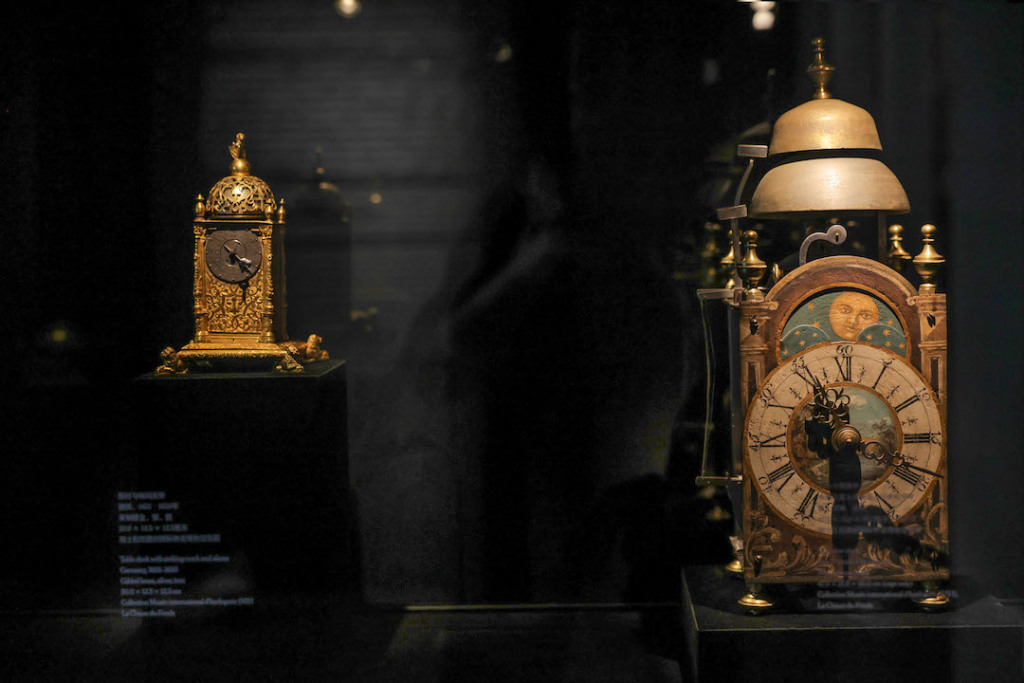
Exhibition site
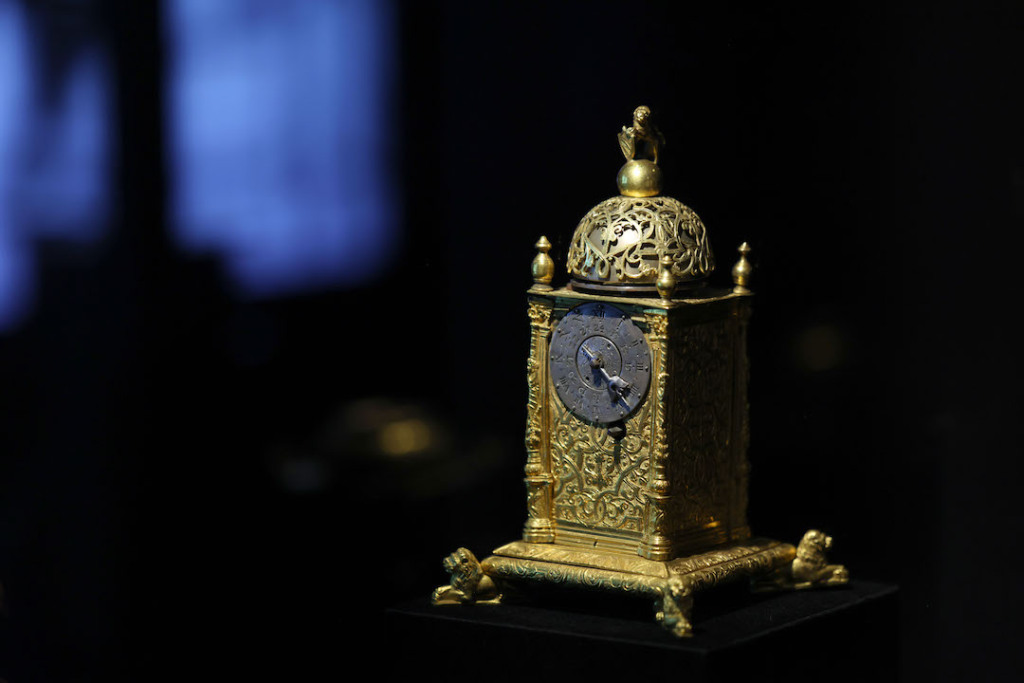
The exhibition features clocks with chiming and alarm functions from Germany, dating from 1601 to 1610.
This section showcases an original replica of a 14th-century mechanical planetary clock, considered the starting point of human timekeeping history. Its complex gear structure and sun-moon-planetary operating mechanism perfectly simulate the medieval worldview, making it the only model in the world that can be publicly exhibited.
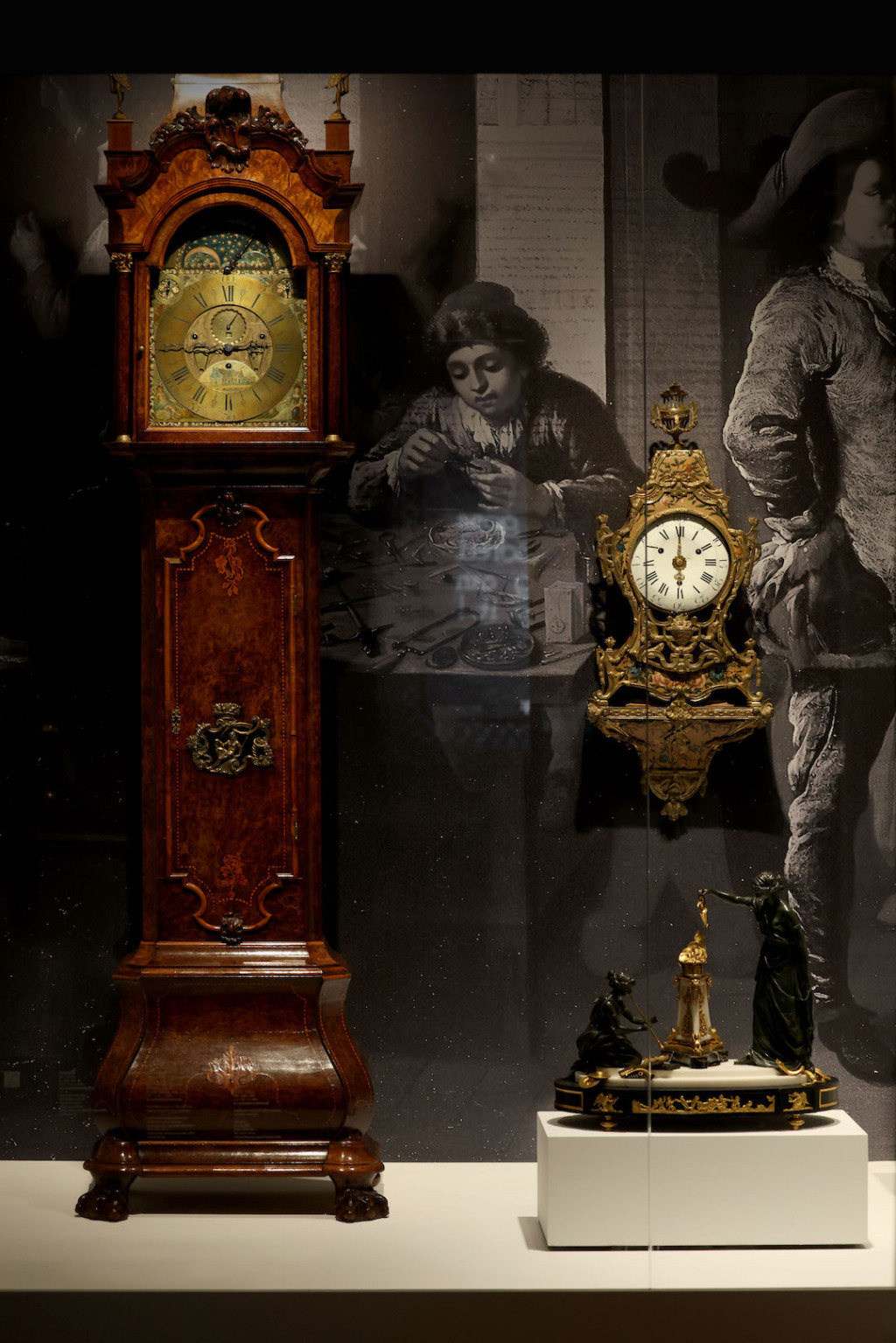
Exhibition site
When pocket watches appeared in the 16th century, time became a tangible object for ordinary people for the first time. As personal items, they carried identity, memories, and emotions, and also became important mediums for miniature paintings, enamel crafts, and metal engravings. The miniature portraits, commemorative phrases, religious images, and symbolic patterns on the backs of each pocket watch bring back the history of "personal time." The exhibition thus delves into the exploration of "time and body" and "time and memory," presenting how time acquires emotional warmth in personal life.
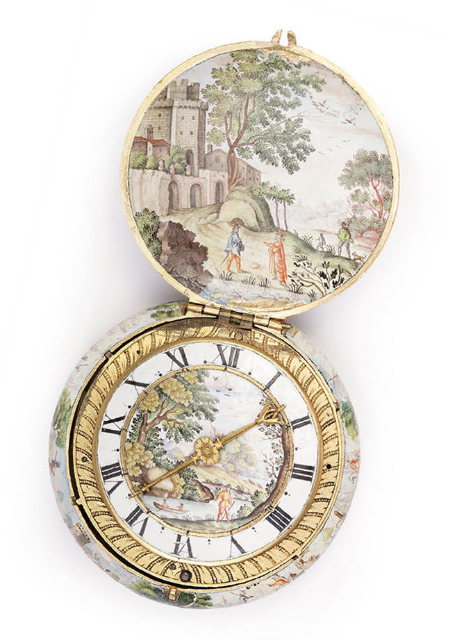
Gourdon round enamel pocket watch, mid-17th century, collection of the International Watchmaking Museum in La Chaux-de-Fonds, Paris, France.
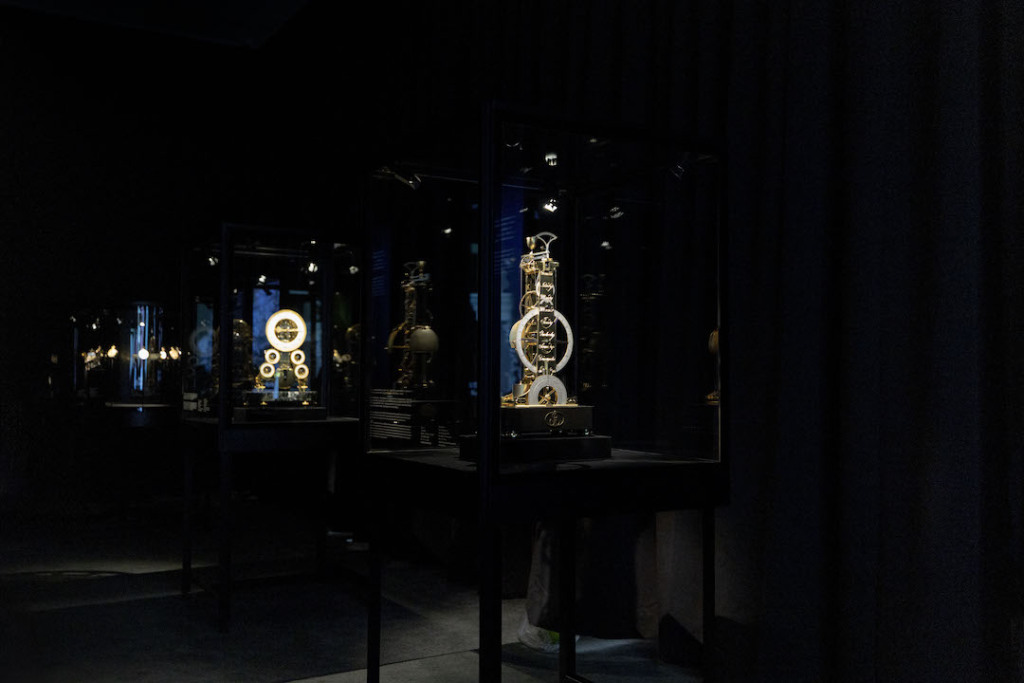
Openwork clock on display at the exhibition
With the advent of an era dedicated to exploring the unknown, the precision of timekeeping became the technological cornerstone determining navigation, geographical surveying, and deep-sea and aerial exploration. From marine chronometers and longitude gauges of the 17th to 19th centuries to the prototype timepieces used for humanity's first 10,000-meter dive and the lunar wristwatches of the 20th century, the exhibition uses a series of timepieces that bear witness to pivotal moments to guide visitors in re-examining the role of time in the history of modern science and human adventure. Time is no longer merely a "measurement," but has become a tool for humanity to break through the boundaries of the world.
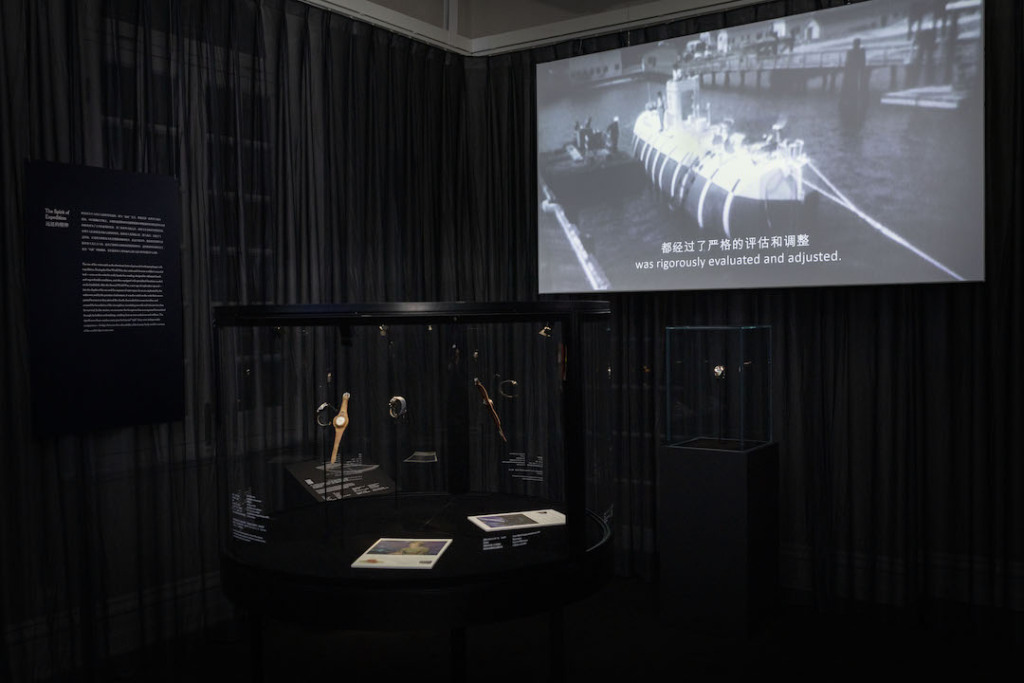
Exhibition site
This section presents for the first time a systematic overview of the development of "extreme timepieces": from the precise marine timepieces used in the 18th century to solve navigational longitude problems, to the experimental prototype timepieces that successfully descended to a depth of 10,916 meters aboard the Trieste during deep-sea exploration in the 20th century, and then to the lunar timepieces worn by the Apollo 11 astronauts during the first human lunar landing mission. These works collectively bear witness to the crucial role of time in scientific revolutions and the human spirit of adventure. Many of these works, due to their high relevance to "world's firsts" and "human exploration of the limits," have long been regarded as irreplaceable cultural assets.
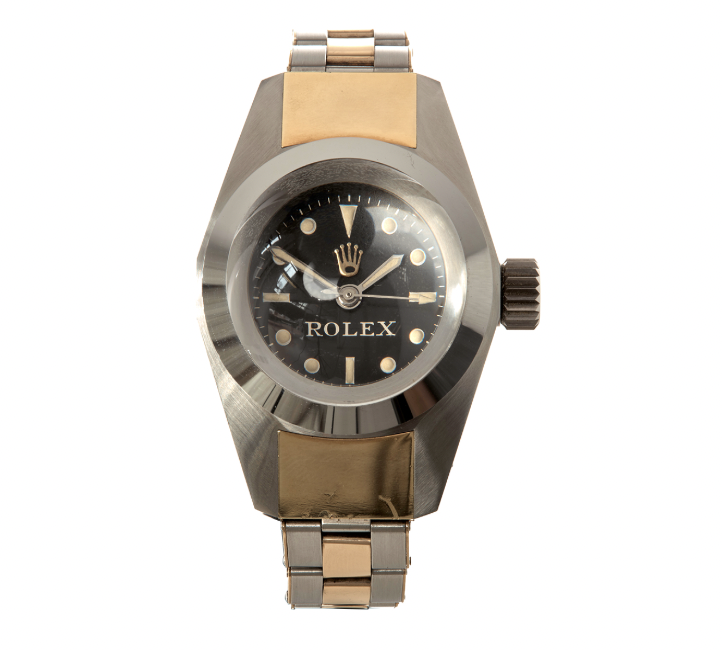
A prototype Rolex deep-sea diving watch, a prototype timepiece that successfully descended to a depth of 10,916 meters aboard the Trieste during deep-sea exploration, is now in the collection of the International Watchmaking Museum in La Chaux-de-Fonds, 1960.
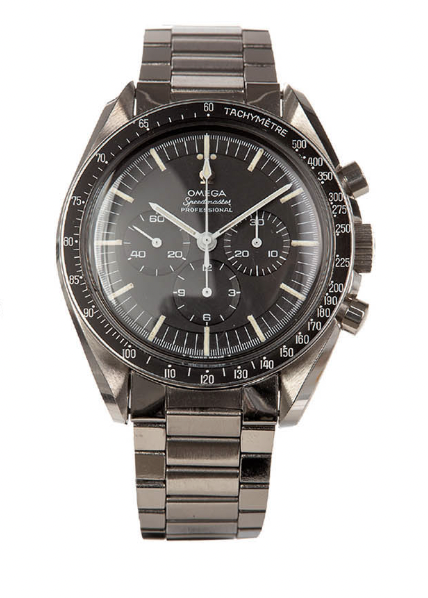
The lunar timer worn by the Apollo 11 astronauts during the first human moon landing is now in the collection of the International Museum of Horology in La Chaux-de-Fonds.
Another narrative thread in the exhibition points to an era considered a "mechanical marvel." When early automata, mystery clocks, mechanical dolls, and perpetual motion machine experiments appeared, they were seen as "living machines" existing between science and magic. Nineteenth-century mechanics, metalworkers, and watchmakers imbued objects with the illusion of movement, rhythm, and life within a small space, turning technology into a poetic performance. The "Magic Mechanics" space specially set up in this exhibition reconstructs the imagination of that era, where machines were seen as magic, through dramatic light and rhythm.
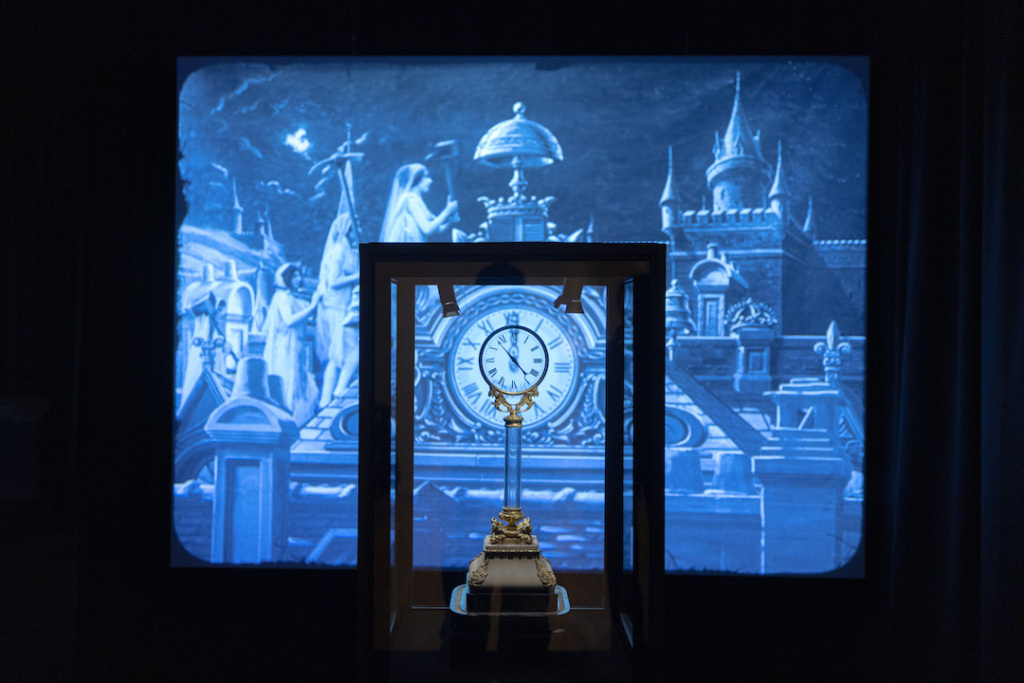
The mysterious clock on display, dating from around 1860, is from the International Museum of Horology in La Chaux-de-Fonds, Paris, France.
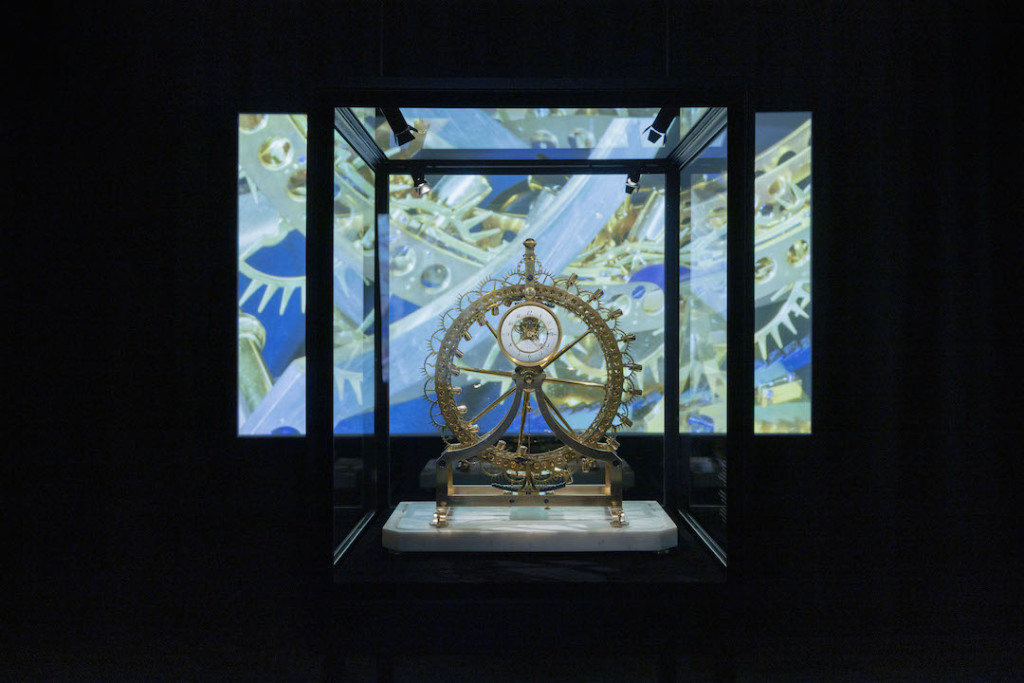
The Mysterious Clock on Display at the Exhibition
Several large 19th-century automata on display are also highlights of this exhibition. Hundreds of handcrafted springs, cams and levers inside drive the mechanical "life" and present highly realistic actions such as playing music, writing and even breathing.
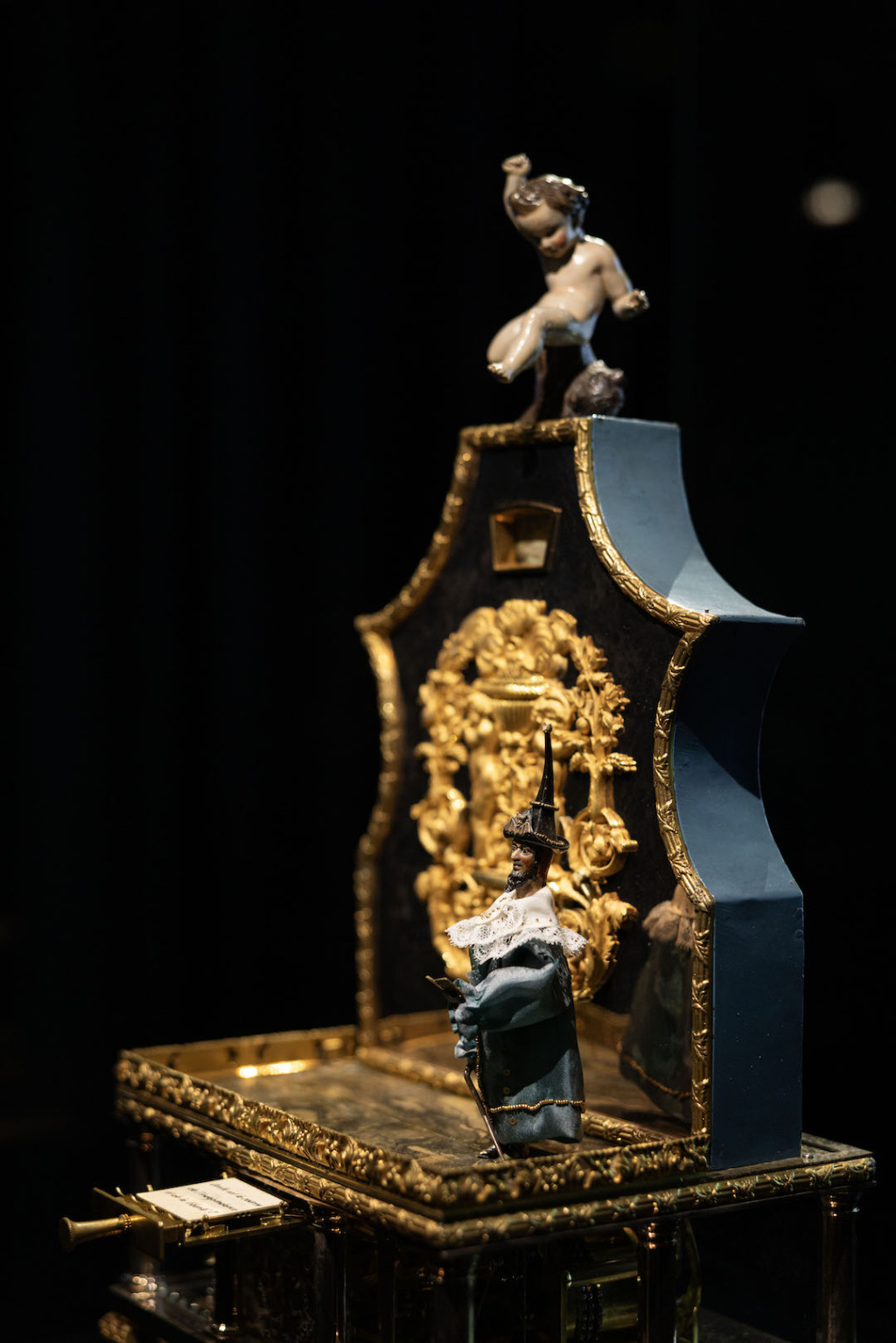
The "Magician" automaton on display, circa 1830, is from the collection of the International Museum of Horology in La Chaux-de-Fonds.
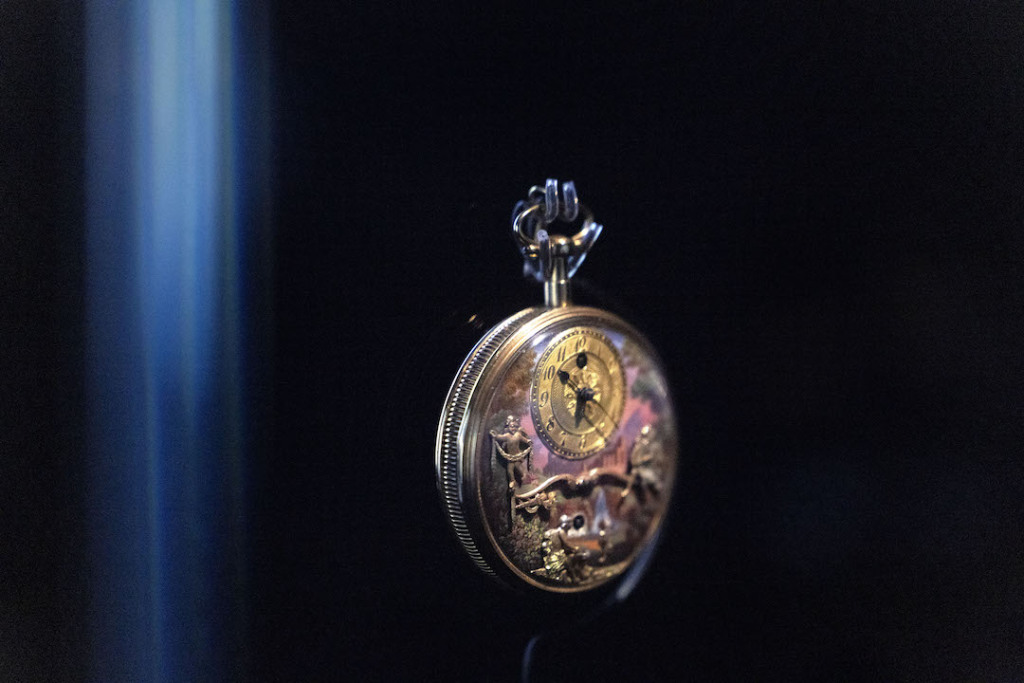
The automaton musical pocket watch on display is from the early 19th century and is housed in the International Museum of Horology, La Chaux-de-Fonds.
The exhibition concludes by returning to the cosmic origin of time. Inspired by the mandala, the exhibition structure connects astronomical clocks, astrological charts, non-mechanical timekeeping instruments, and symbolic images, showcasing how time becomes a path for humanity to understand the order of the universe. Here, "time" transcends mechanics, structure, and science, returning to the realm of spirit, symbolism, and philosophy.
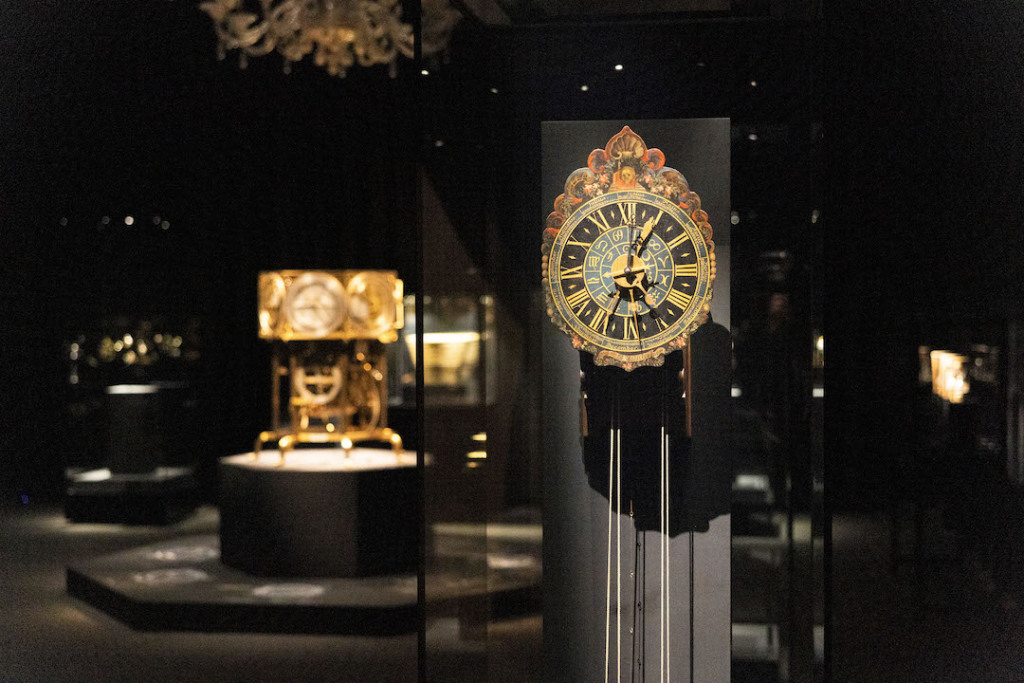
Exhibition site
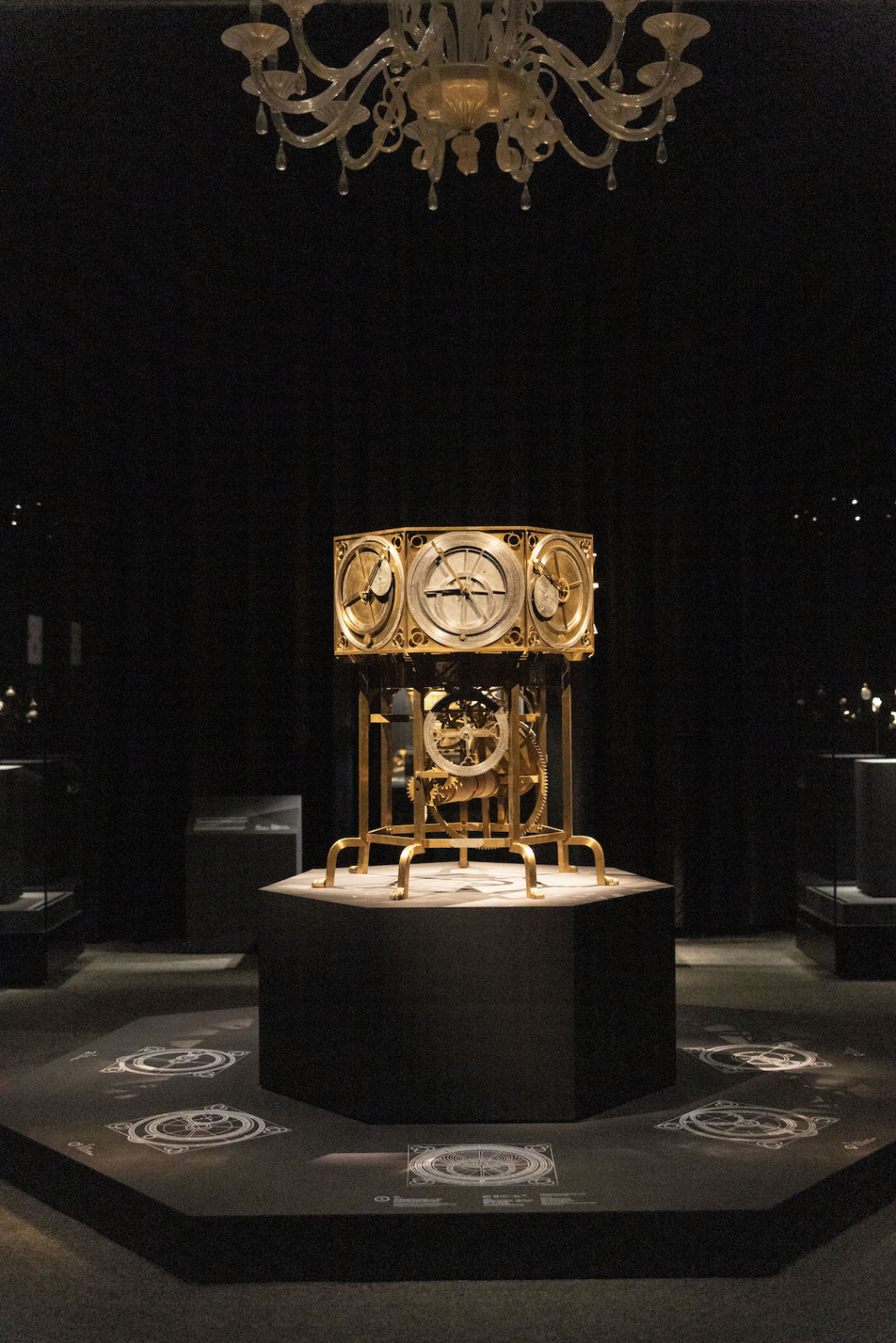
The planetarium on display, originally created between 1365 and 1380 and restored in 1985, is from the collection of the International Museum of Horology in La Chaux-de-Fonds.
This section showcases the astronomical clock from 1365, a prized possession of the Musée International d'Horlogerie (MIH) in La Chaux-de-Fonds, Switzerland. According to the curator, this Renaissance planetarium was created between 1365 and 1380 by the Italian writer and clockmaker Giovanni Tondi. It is recorded as the first mechanical planetary clock in human history. Lost in war during the 16th century, it was reconstructed in the 20th century based on the original manuscripts, and only eight such clocks exist worldwide today.
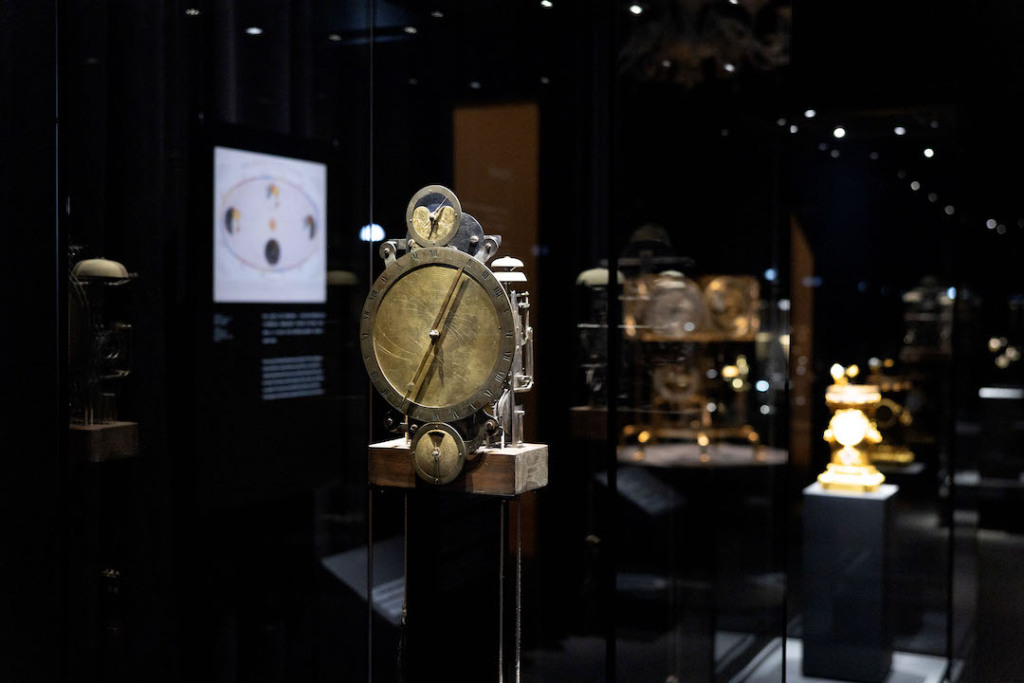
Exhibition site
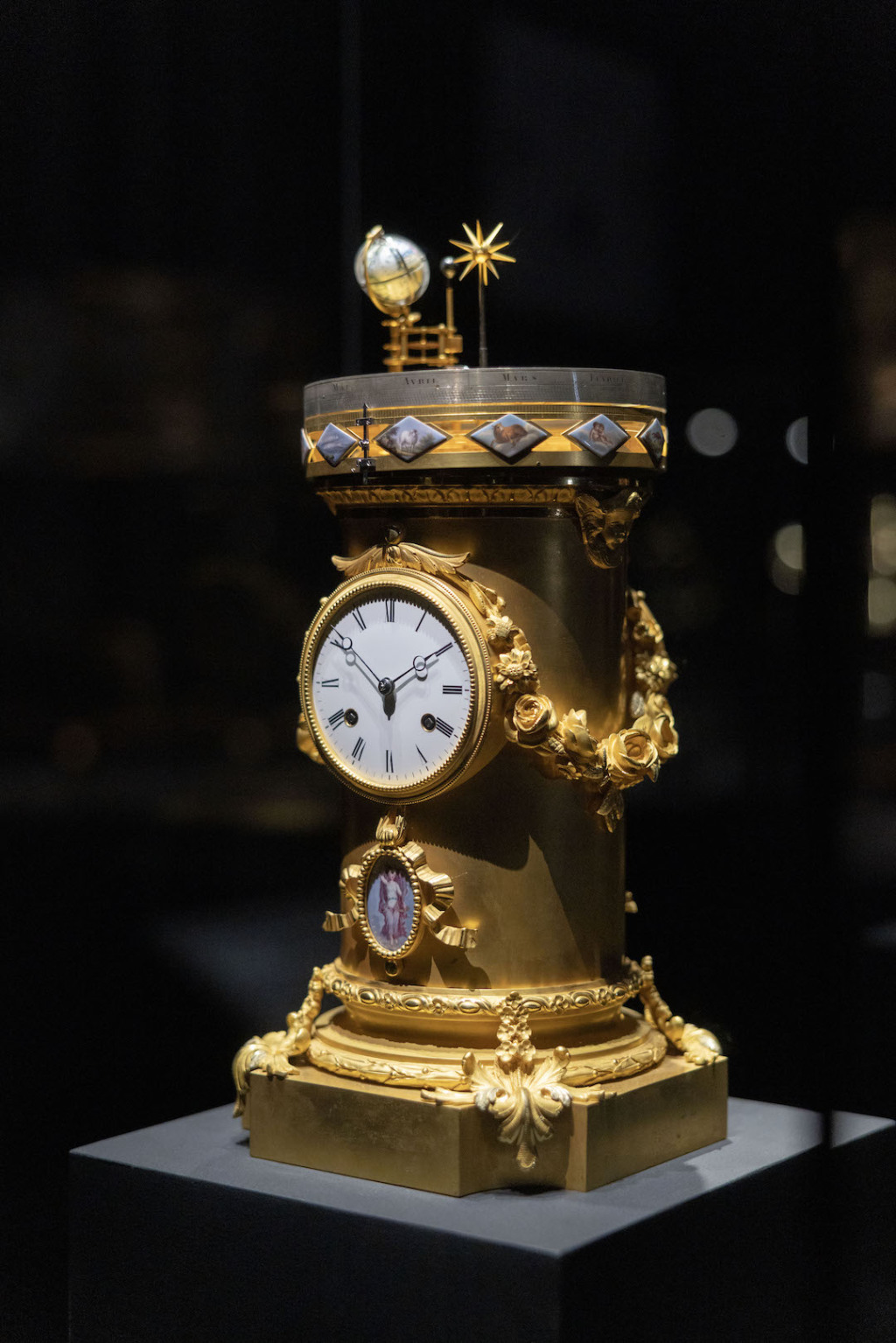
Exhibition site
In addition, the exhibition also displays a collection of historically valuable artifacts and documents, further concretizing this 700-year timeline. For example, one of the exhibits is a book published in 1919, *La Montre chinoise* ("Chinese Watches"), which is the first publication to record cultural exchanges between China and Switzerland. Swiss businessman and watchmaker Gustave Lupp describes in detail his firsthand observations of the interactions between the two countries and the emergence of "Chinese" watches in the process; systematically tracing the historical origins of Swiss watchmaking and China dating back to the 18th century.
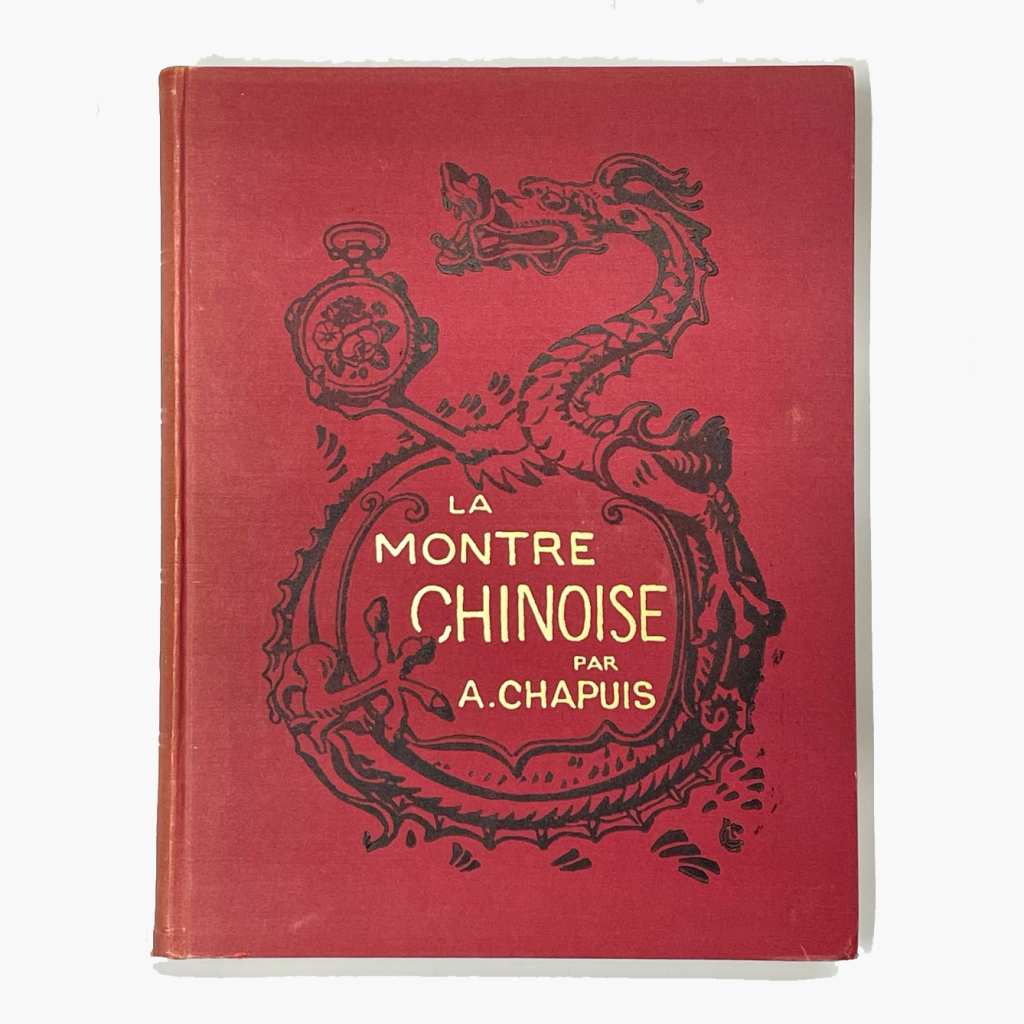
The book published in 1919 – La Montre chinoise ("Chinese" clock)
This exhibition also showcases the "Tianyi Flying Wheel" series by Jiao Dayu, an internationally renowned independent Chinese watchmaker, and his collection of horological treasures.
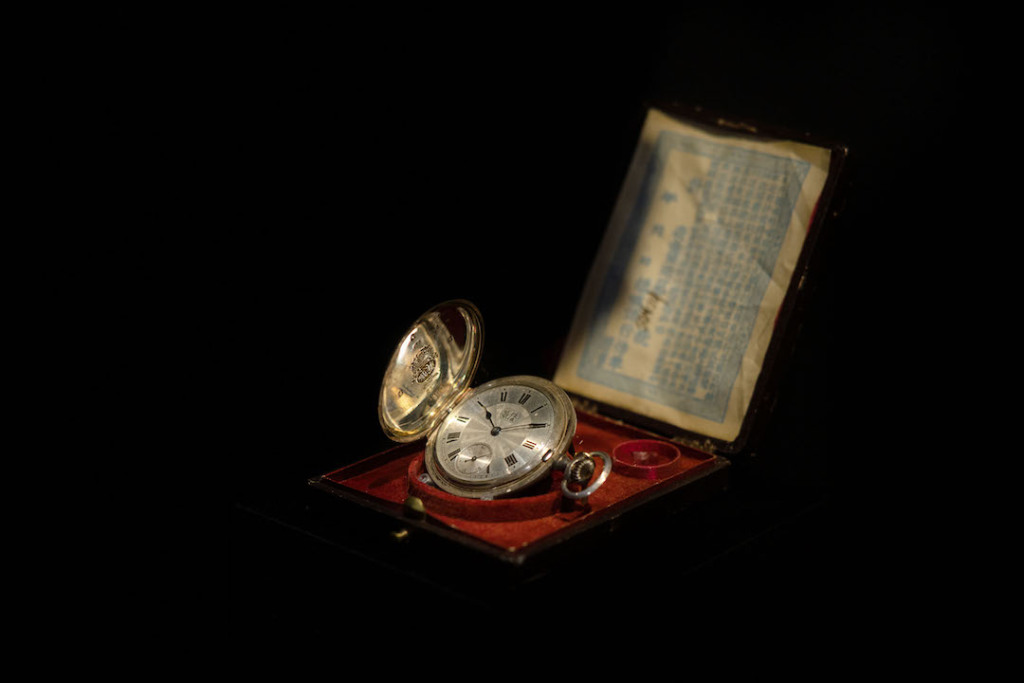
Pocket watches made by Bovet for the Chinese market and displayed at the exhibition.
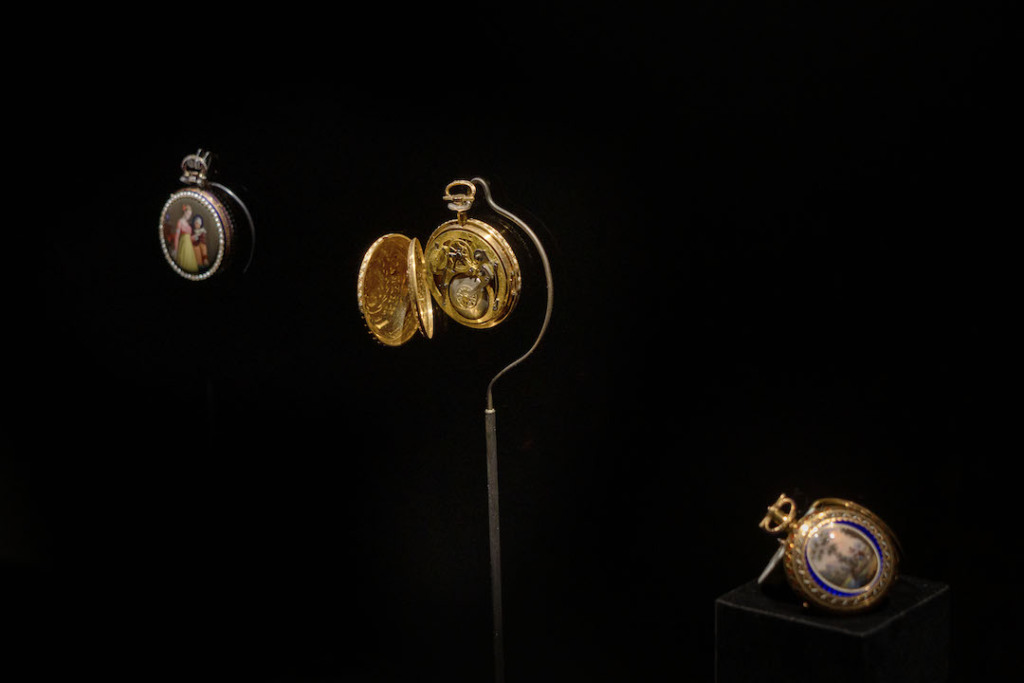
Exhibition site
This exhibition will run until March 1, 2026. (Note: This is a paid exhibition.)