Hou Hanru, a renowned curator and critic in his sixties, is an important figure in introducing Chinese contemporary art to the Western world. Over the past 40 years, he has curated more than 150 exhibitions around the world, presenting the globalization process of contemporary art in a unique way.
The "Wait and See Library," which recently opened for trial operation on the third floor of the Shanghai Museum of Contemporary Art (PSA), presents the first chapter of Hou Hanru's "Adapting to Local Conditions" series of exhibitions—"Home Across the World"—which reviews his decades of artistic practice through documents. "As a curator, one part of my work is to preserve memories and practices as much as possible so that they can provide reference for the present and the future," Hou Hanru told ArtPulse at the "Wait and See Library."
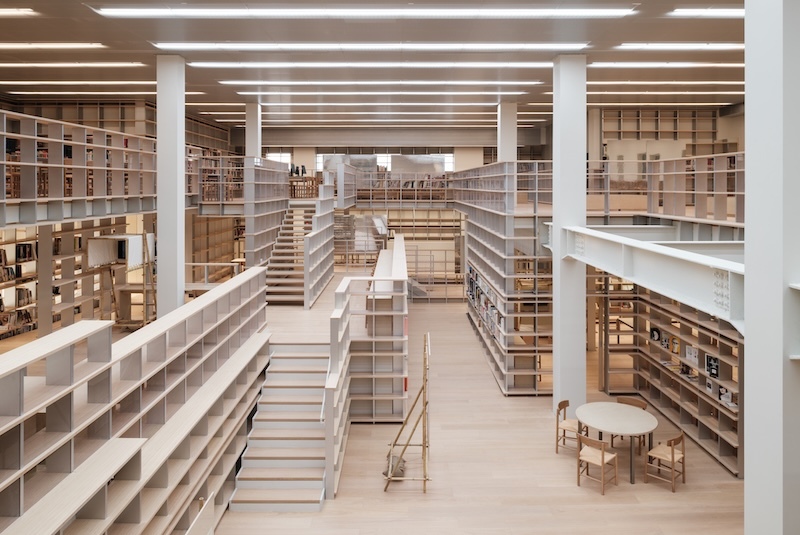
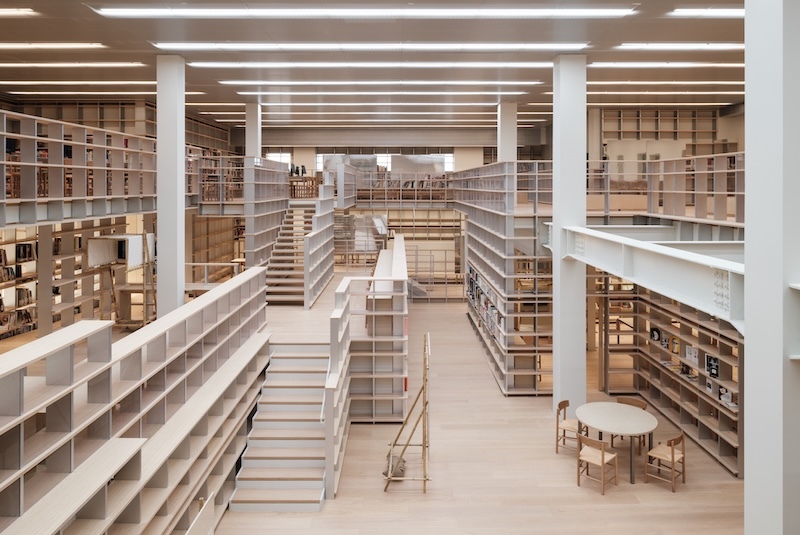
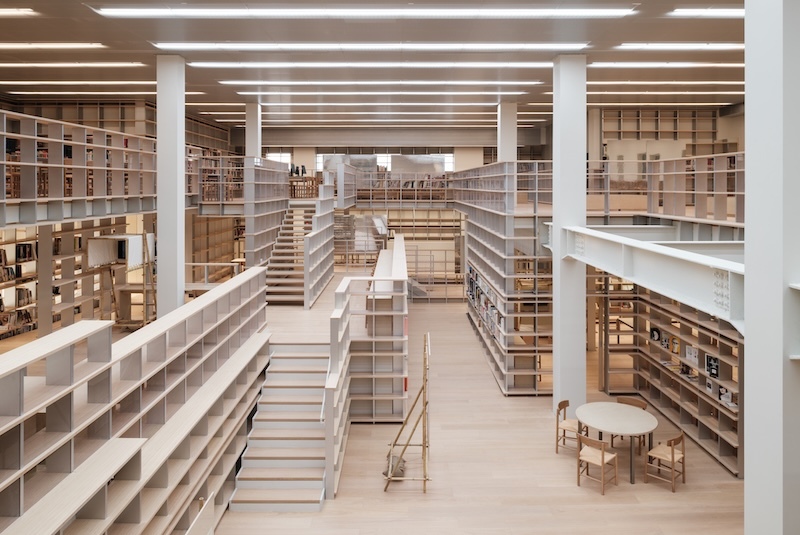
Shanghai Museum of Contemporary Art "Wait Library" ©️CHANEL ©️Shanghai Museum of Contemporary Art
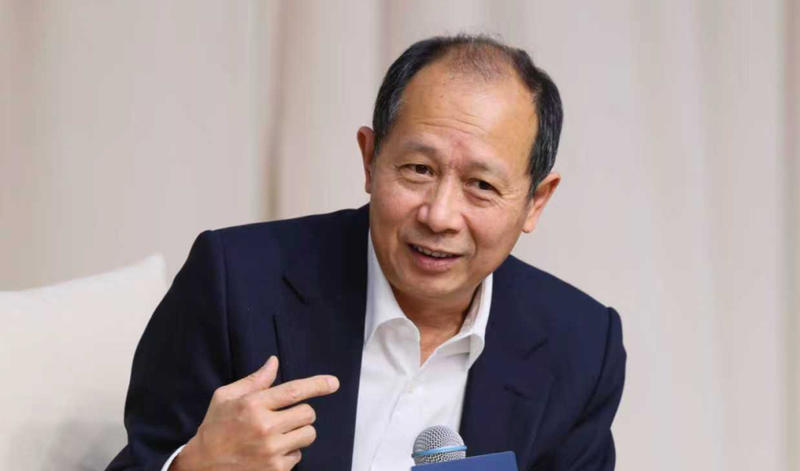
Hou Hanru
The Shanghai Museum of Contemporary Art's "Wait Library," designed by Kazunari Sakamoto, is China's first public library focusing on contemporary art and design, and also a public art knowledge platform.
“Reading here is neither like being at home nor on the street; it’s the ideal research space, creating a subtle dialogue between the public and the private,” Hou Han commented on “Wait Library.” Reflecting on his own curatorial work, he felt it was somewhat like Roland Barthes’s “Roland Barthes on Roland Barthes,” seemingly a recollection of childhood, but actually a fragmented return to language itself. “I also want to return to the works, to rediscover what else can be gleaned?”
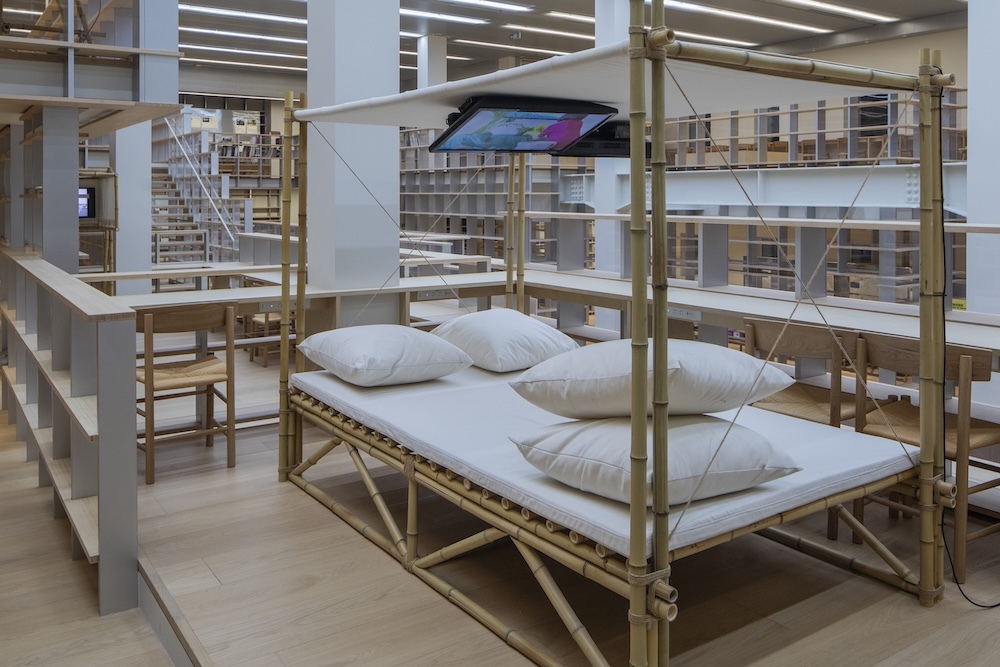
Hou Hanru's "Adapting to Local Conditions" series of exhibitions, Part 1 – "Home is Everywhere" exhibition view, Shanghai Museum of Contemporary Art, 2025 ©️CHANEL ©️Shanghai Museum of Contemporary Art
Walking among the bookshelves and display shelves of "Wait Library", from the exploration and experimentation during the Central Academy of Fine Arts period in the 1980s, to the international vision in Paris in the 1990s, to the Shanghai Biennale in 2000, and then to more contemporary art practices at home and abroad, each curation is not only an extension of personal artistic concepts, but also a concrete practice of positioning independent Chinese and "non-Western" contemporary art in the global context.
“People will revisit history, but there will be no absolute truth. One part of my work is to preserve memories and practices as much as possible so that they can serve as a reference for the present and the future,” Hou Hanru said.
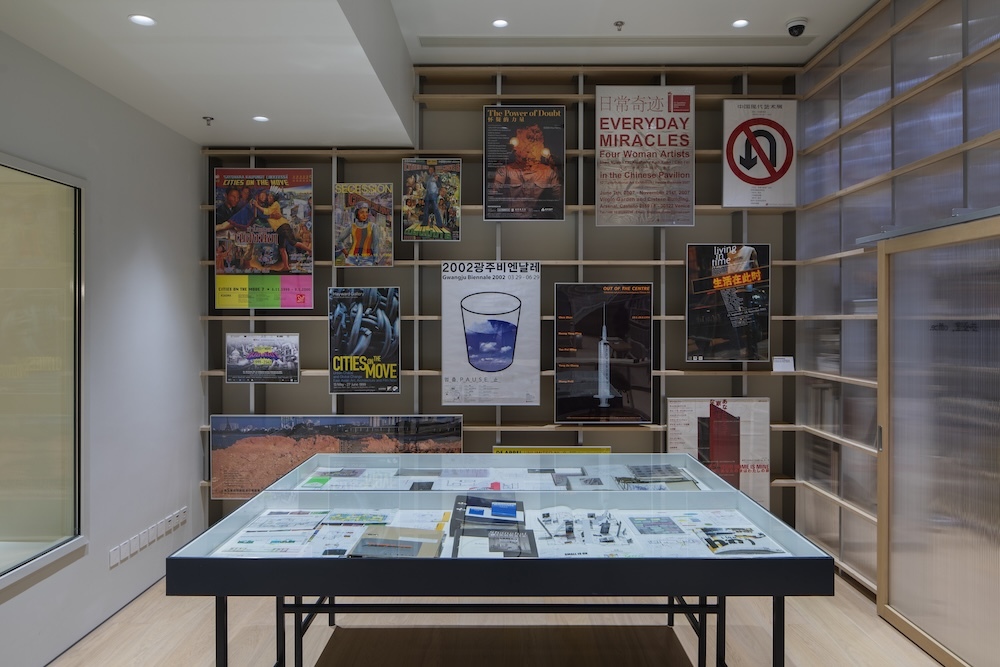
"Home is Where the World Is" exhibition view, Shanghai Museum of Contemporary Art, 2025
Starting with the first two rounds of discussions in 2000: This was "the sowing of the seeds of the system".
Among the curatorial documents by Hou Hanru on display, a folder from the 3rd Shanghai Biennale in 2000 instantly brought back memories of the turn of the century. This exhibition, themed "Shanghai at Sea," marked a turning point in the Shanghai Biennale's transformation into China's first truly international biennale, and was also the first to be co-curated by Chinese and international curatorial teams, with Hou Hanru being one of the curators.
Recalling the exhibition more than 20 years ago, Hou Hanru said with a smile that it was not curating, but "building from scratch".
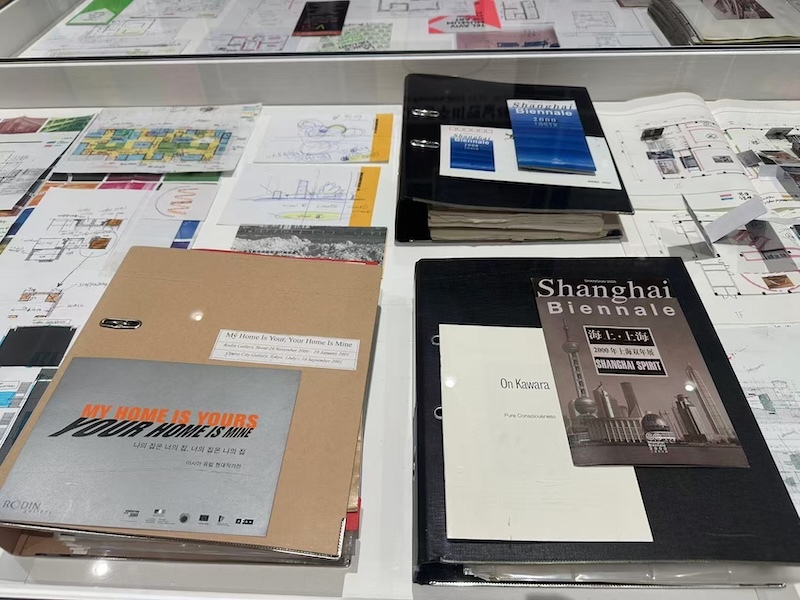
The exhibition includes folders related to the 3rd Shanghai Biennale in 2000.
“Back then, there was almost no complete and professional art museum in China,” he recalled. “When the works arrived, they were unloaded directly in the parking lot, and a few migrant workers were hired to move them. There were no professional procedures such as transportation and insurance. In the Shanghai Art Museum, a few aunties were hanging the paintings with hooks.” On one occasion, a batch of works arrived at night, and Hou Hanru even took technicians and migrant workers to the night market to buy tools and gloves and guide them in unpacking.

At the Shanghai Biennale 2000, Huang Yongping's work "The Bank of Sand or the Sand of the Bank," installation, 1570×1260×700cm, 1996-1997.
“This isn’t curating; it’s sowing the seeds of an system.” The scene of contemporary Chinese art began to take shape from these nights of “buying tools at the night market.” “What we achieved was not just continuing the biennial, but establishing the ecosystem of contemporary Chinese art.” It was after this edition that the Shanghai Biennale shifted from a single-media exhibition to focusing on socio-cultural issues, becoming China’s most internationally influential contemporary art platform. Since then, local art exhibitions in Shanghai and even China have gradually become standardized and professional.
Every time Hou Hanru returned to Shanghai afterward, he would lament that he "couldn't keep up with the city's growth rate." New art museums were springing up one after another; new institutions, new projects, and new spaces were constantly emerging. "Some I didn't even have time to visit, and some were too far away. But this shows the expansion of the city's cultural life."
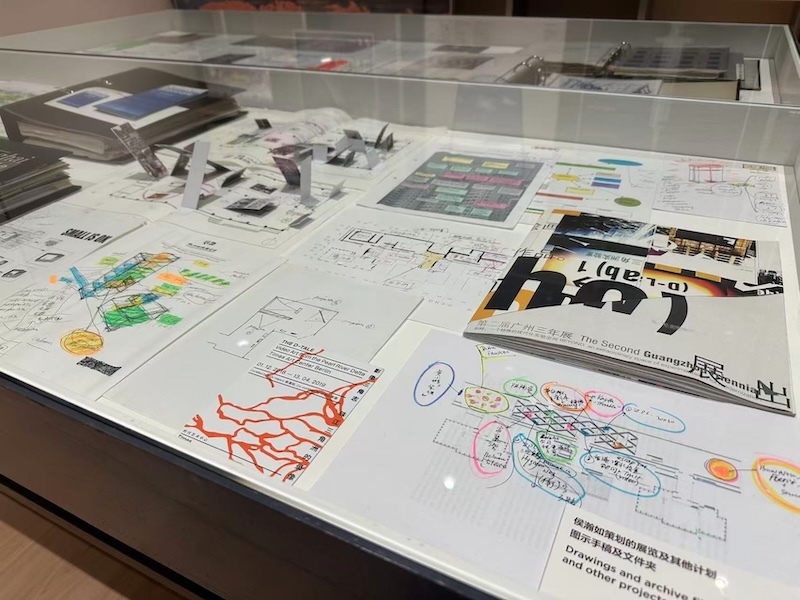
Hou Hanru's exhibition and other planned illustrations, manuscripts, and folders
As early as 2010, Hou Hanru was deeply involved in the operation of the Rockbund Art Museum in Shanghai, proposing that art museums should not be merely exhibition venues, but rather cultural hubs for the city. Through the exhibition "Day and Night, or Some Things Art Museums Can Do" (2010-2011), he showed the city what art museums could offer—public spaces, public discussions, and public actions. This became the starting point for the "art nightlife" that continues to this day.

Exhibition view of "Day and Night, or Some Things a Museum Can Do" (2010-2011) at the Rockbund Art Museum, Shanghai.
In recent years, Hou Hanru has also served as an academic committee member for the collaborative projects between the Shanghai Museum of Contemporary Art, West Bund Art Museum, and the Pompidou Centre. He was also instrumental in promoting the widely discussed "Fluidism" exhibition at the West Bund Art Museum this year.
As for the Shanghai Museum of Contemporary Art (PSA), which has accompanied and empowered Shanghai's art ecosystem for more than a decade, Hou Hanru jokingly said, "The biggest change at PSA is that there hasn't been much change." He added, "The changes aren't nonexistent, but they've occurred in a way that doesn't chase trends—the professional team is stable, the exhibition logic is clear, and both the architecture exhibitions and the artist research exhibitions have a consistent main theme."
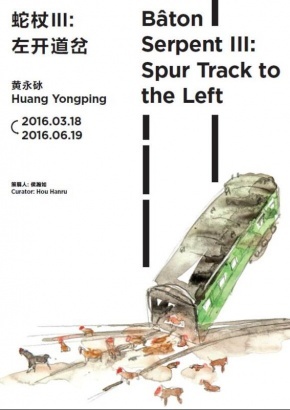
"Huang Yongping, The Caesar III: Left Fork" (2016) Exhibition Poster
Hou Hanru's curated exhibitions for PSA include: "Huang Yongping, Caesars III: Left Fork" (2016), "Chen Shaoxiong: Everything is Ready" (2016), "Zhang Enli Solo Exhibition: The Moving Room" (2020-2021), "Liang Shaoji: I am the Silkworm" (2021-2022), and the ongoing "'Adapting to Local Conditions' - Hou Hanru's Curatorial Journey Series". Reflecting on PSA and his own practice, Hou Hanru remarked, "In an era where art museums are so popular, maintaining a systematic approach is the most difficult thing."
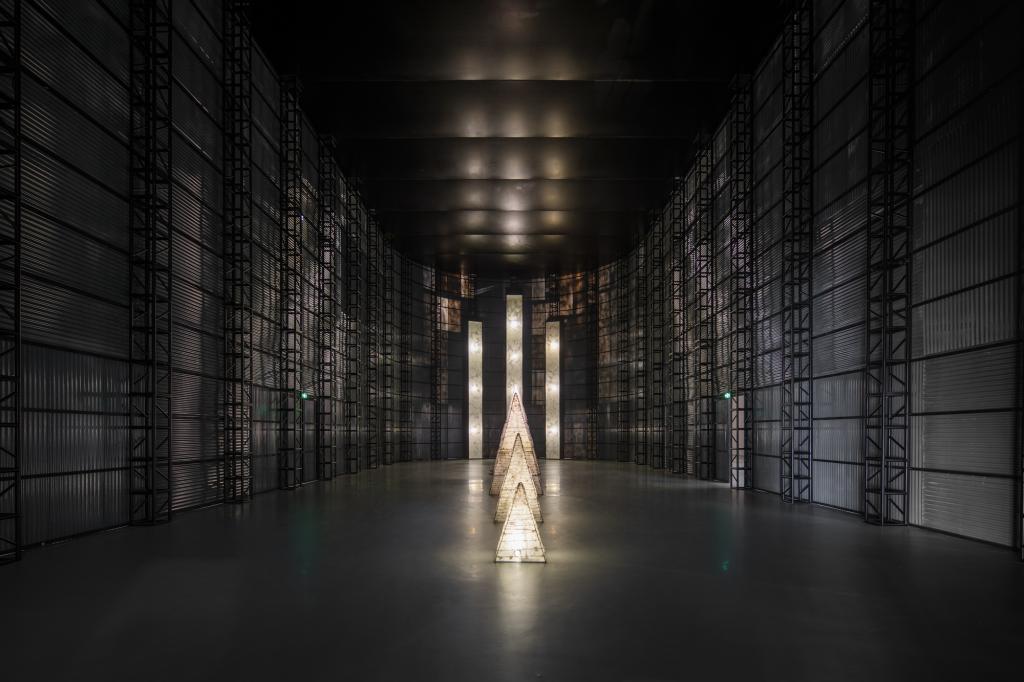
"Liang Shaoji: The Silkworm Me, I the Silkworm" (2021-2022) exhibition view, © Shanghai Museum of Contemporary Art
In his view, the development of an art museum and a city is always a process of mutual shaping. Curating is not about "providing a theme," but about continuously promoting the improvement of systems and mechanisms—the reason why an exhibition appears reflects how the city's cultural ecology operates, how public resources are distributed, and how institutions produce knowledge and publicness.
The role of art in a city is not merely to display a few artworks, but rather to create a place where different ideas and individuals truly intersect. Just as Beuys' concept of "social sculpture" is a fundamental explanation of publicness and the intervention of art in the city.
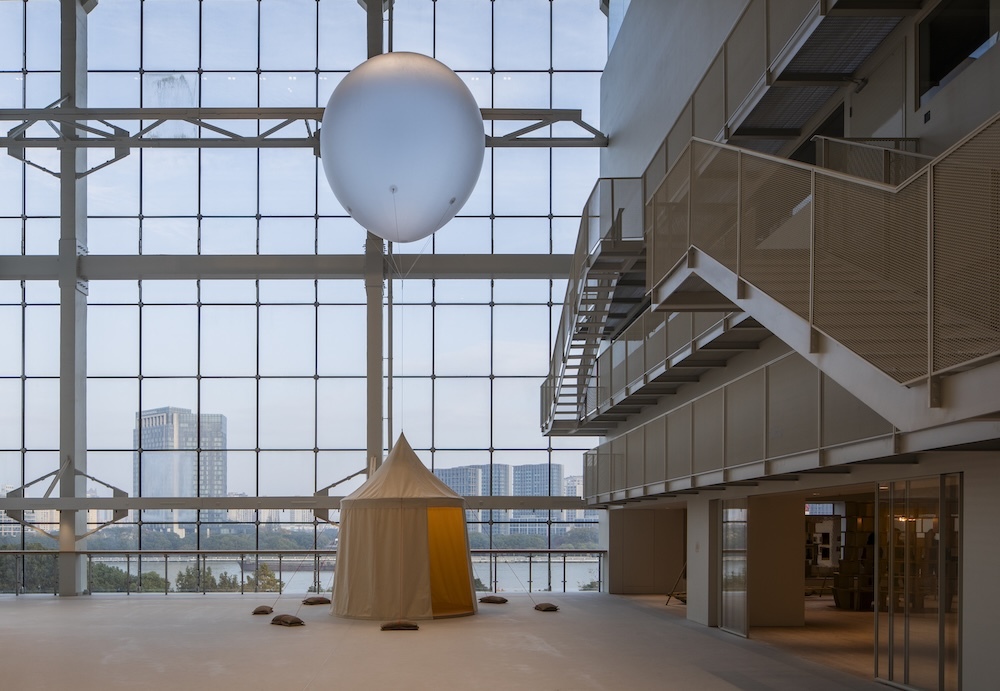
"Home is Where the World Is" exhibition view, Shanghai Museum of Contemporary Art, 2025
From the Central Academy of Fine Arts to Global Practitioners of Contemporary Art
In the “Wait Library”, a space that is both open and introspective, Hou Hanru discusses the exhibition system and his personal creative history. When the topic shifts from “the scene of the times” to “personal retrospect”, the key moments he personally experienced, participated in, and promoted emerge in his conversation.
Hou Hanru was born in Guangzhou in 1963 and developed a strong interest in "strange things" from a young age. During his childhood, he and his family often secretly listened to music at home, and in junior high school, he wrote an article about Cézanne. "Back then, I tried everything: playing football, reading, writing. I wanted to be an artist, and I wanted to learn other things too; I was curious about everything." However, when he applied to the Guangzhou Academy of Fine Arts Affiliated High School, his work, with its "pointillist" style, was rejected on the grounds of being "bourgeois art." Hou Hanru recalled that this was both a limitation of the art education system at the time and perfectly suited his rebellious and free-spirited nature. Later, when he applied to the Central Academy of Fine Arts, he included his research on Cézanne in his application materials. This experience of academic and artistic exploration laid the foundation for his later independent artistic concepts.
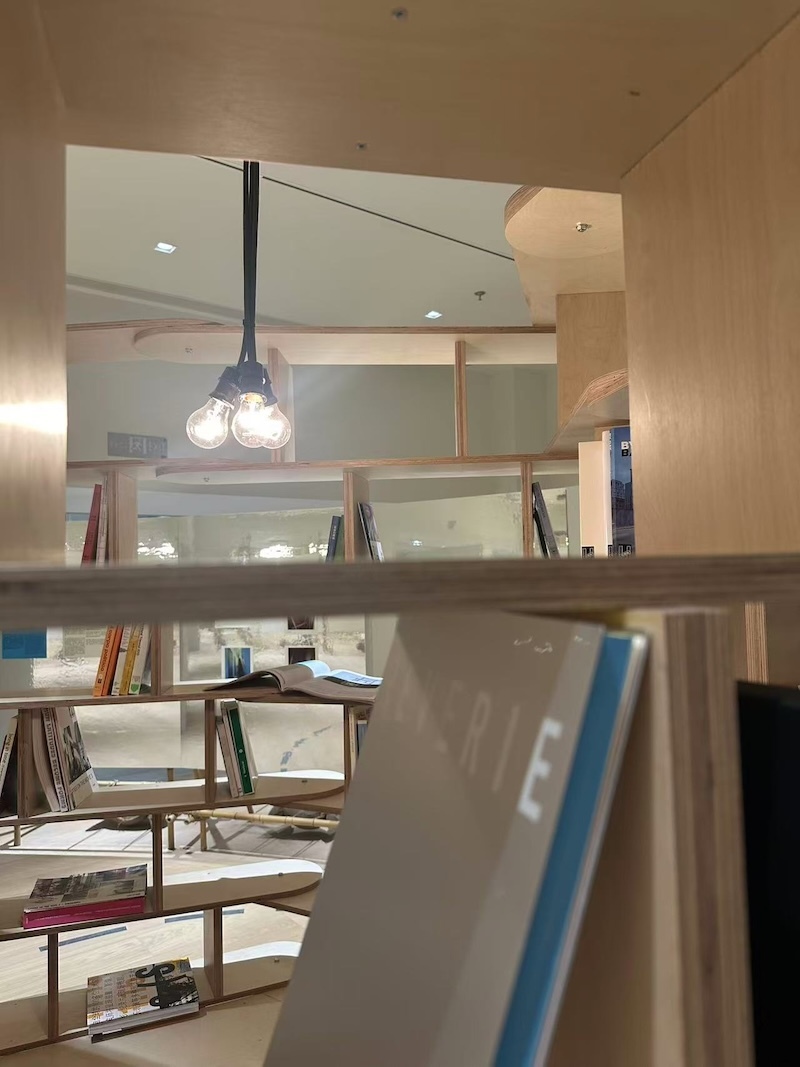
Shanghai Museum of Contemporary Art "Wait and See Library"
In the 1980s, the Central Academy of Fine Arts (CAFA) was located in Wangfujing, Beijing, with only about a hundred students and three to four hundred faculty members. Here, Hou Hanru met a group of mavericks who explored the boundaries of art and conducted cultural experiments together. Hou Hanru recalled, "The earliest rock music in China also sprouted here. My classmates and I often brought Cui Jian to the academy to share the earliest rock experiments." Weekend dances were a unique form of free expression characteristic of that era. This experience exposed Hou Hanru to the experimental nature of avant-garde and conceptual art at an early age, forming the foundation for his later curatorial thinking: an exhibition or art event is not merely a display, but a provision for experimentation, exchange, and public space.
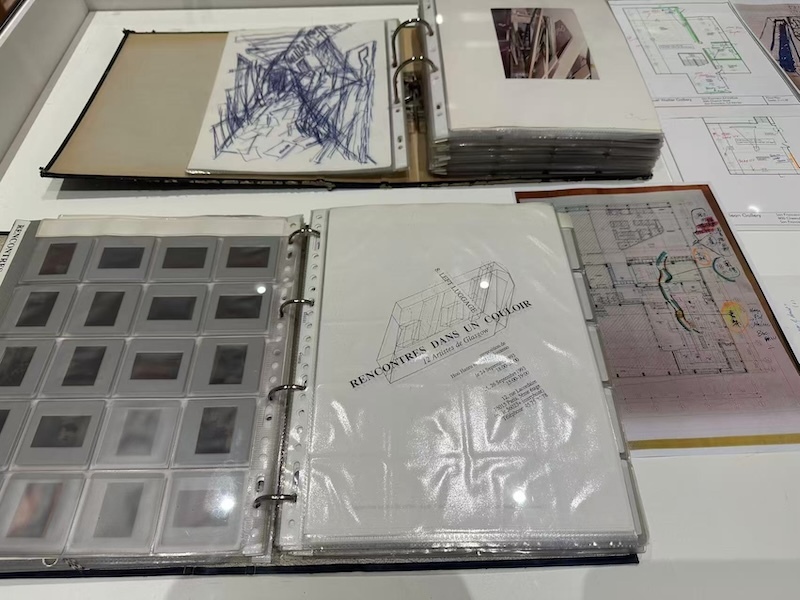
Hou Hanru's exhibition and other planned illustrations, manuscripts, and folders
In the late 1980s, Hou Hanru became more proactive in exploring new methods in contemporary art. He frequently participated in seminars organized by the "New Scale Group," comprised of Gu Dexin, Wang Luyan, and Chen Shaoping, experimenting with conceptual art practices. Furthermore, his classmate Fei Dawei from the Central Academy of Fine Arts was involved in the preparation of the "Magicians of the Earth" exhibition and established connections with the European avant-garde art scene, inviting Hou Hanru to participate in the discussion of the "China's Yesterday and Tomorrow" exhibition. This experience not only introduced him to the European art world but also led him to meet his future wife and business partner, after which he remained in France.
For his first exhibition in Paris, Hou Hanru invited Yan Peiming, who lives in France, to participate, while the others were artists from France, Italy, the United States, and other countries. Hou Hanru believes that his work is "more about translating artistic experiences from different cultures and contexts, thus highlighting the blending and innovation between culture and personal experience." This stance also laid the foundation for his later global curatorial vision: art is both a product of regional culture and a platform for cross-cultural experimentation.
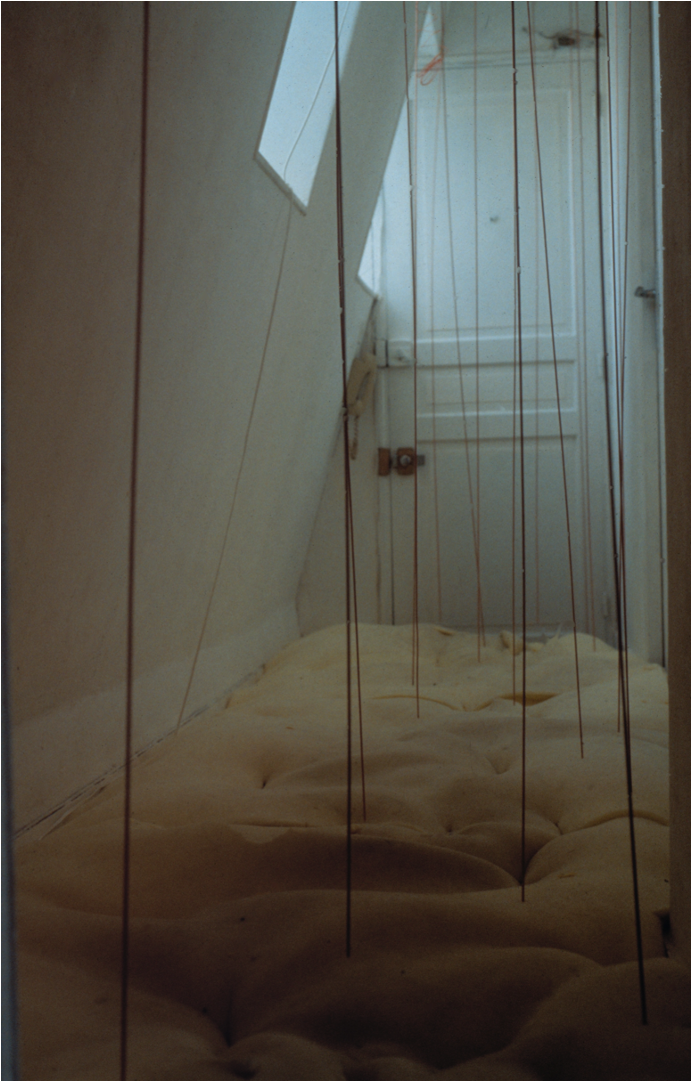
In the early 1990s, Hou Hanru invited Yang Jiecang to create works for an exhibition at his home in Paris.
In 1994, Hou Hanru curated the "Out of the Centre" exhibition in Pori, Finland. This was his first formal international exhibition related to contemporary Chinese art. Through this exhibition, Hou Hanru put forward the common desire of Chinese artists in the 1980s: to break out of the center, to leave behind the pursuit of "centrism," and to find their own place in the world art landscape.
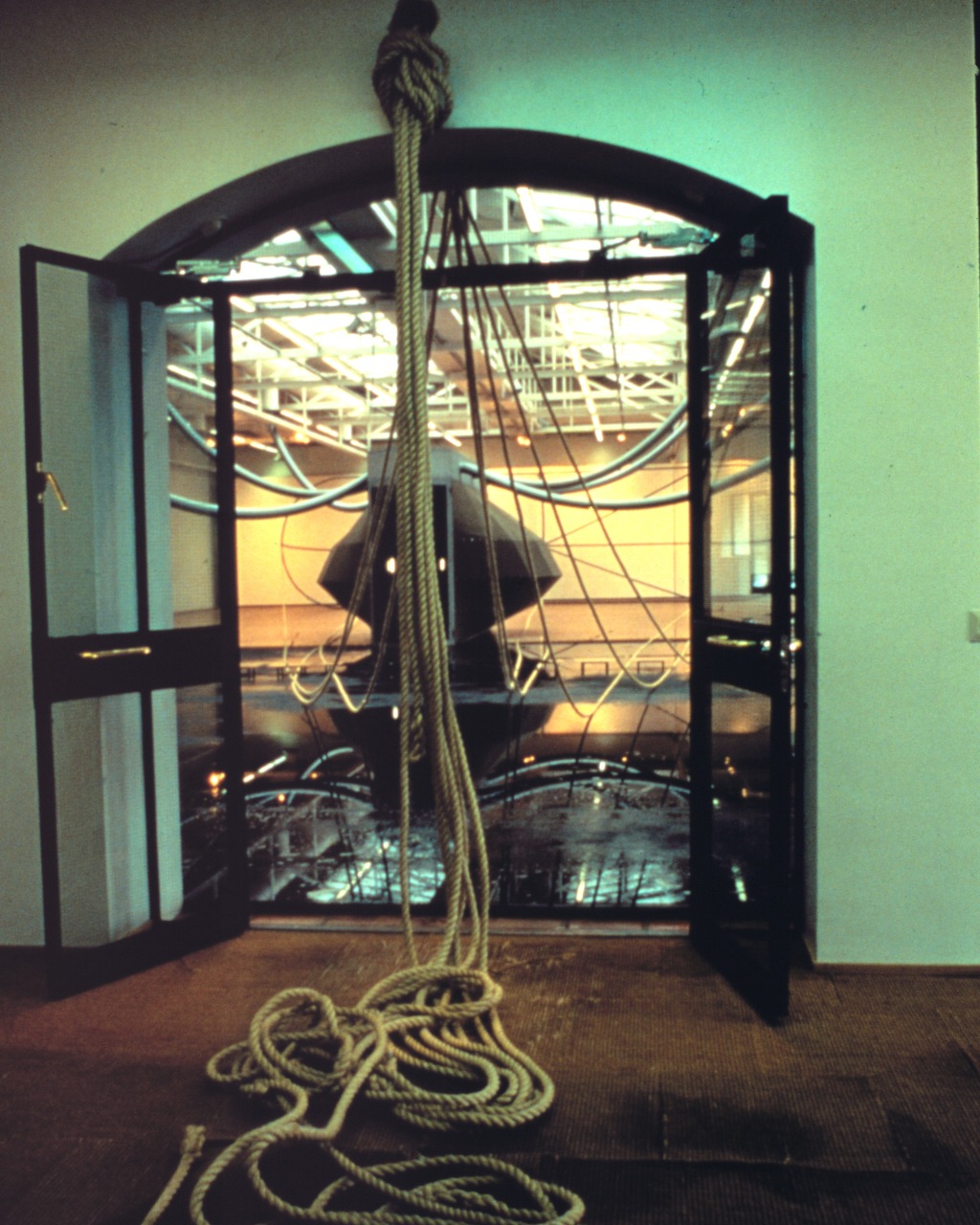
"Stepping Out of the Center" Exhibition: Works by Huang Yongping
In this exhibition, he invited four artists who had lived in France—Huang Yongping, Chen Zhen, Yan Peiming, and Yang Jiecang—to join Zhang Peili in Finland. They integrated their works into a unified structure, creating an experimental cross-cultural interaction. At the end of the exhibition, Huang Yongping used a "fishing net" to connect the exhibition space. This was a plan he was unable to realize in the "China Modern Art Exhibition" (held at the National Art Museum of China in 1989)—"His 'fishing net' was at the end, and all the other works passed through it. Finally, Huang Yongping dug a hole at the exit, and a rope went through the hole. It seems that with a pull, the so-called Chinese contemporary art became a wanderer of the world, 'making the world one's home'—that's the meaning of it."
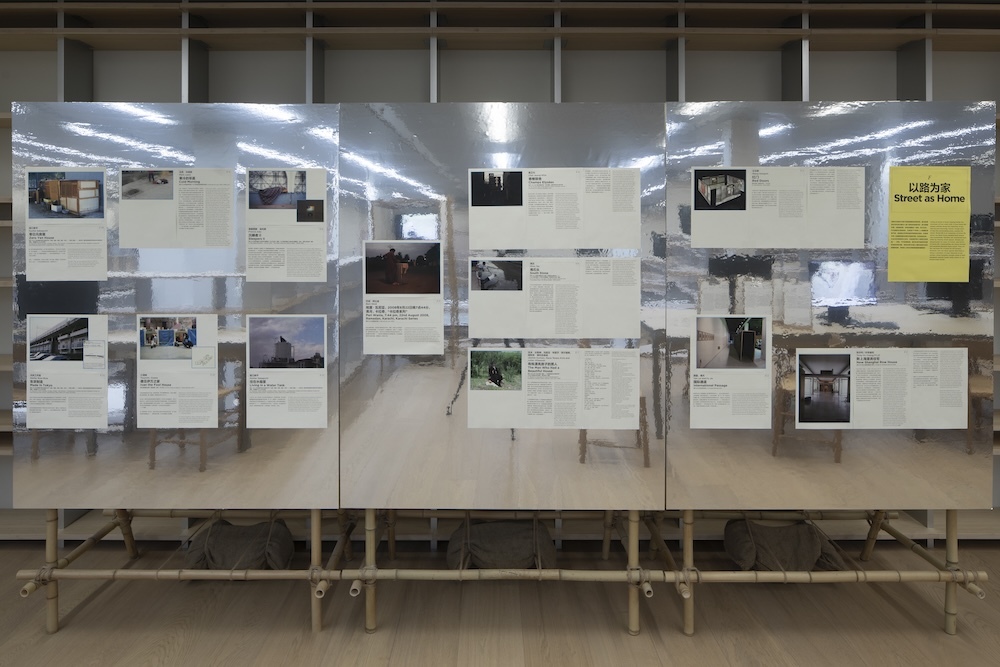
"Home is Where the World Is" exhibition view, Shanghai Museum of Contemporary Art, 2025
For Hou Hanru, "making the world his home" is not a romantic label, but a way of life formed by navigating various socio-cultural realities around the world. Paris, San Francisco, Tokyo, Rome, Shanghai... these locations are not only markers of his professional path, but also reference points for him to understand how art generates meaning in different contexts and public spaces. However, he is more concerned with the realities of life in the world.
During Hou Hanru's curatorial journey of "making the world his home," the world has changed, tastes have changed, society, politics, and the economy have all changed, and even the definition of art itself has changed. "Some things will never change, such as the fundamental questions of art, even if the forms of art change," Hou Hanru said.
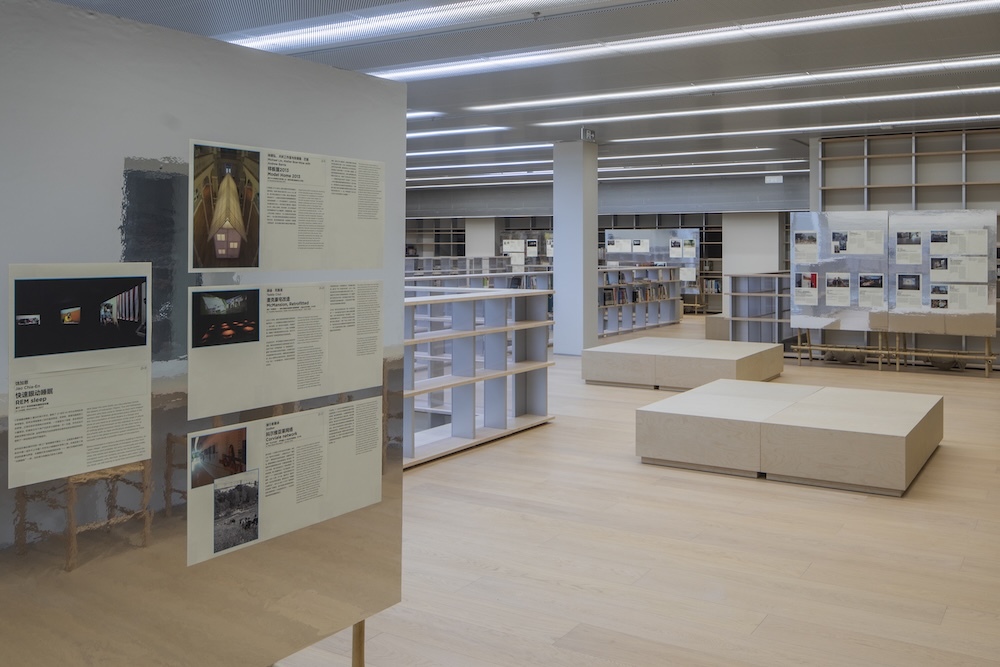
"Home is Where the World Is" exhibition view, Shanghai Museum of Contemporary Art, 2025

"Home is Everywhere" Exhibition Poster