A single sheet of decorative stationery, within its small space, not only embodies the wisdom of ancient Chinese papermaking, woodblock printing, and other techniques, but also carries the aesthetic tastes and spiritual pursuits of scholars throughout history. On December 13th, the exhibition "Who Sends a Brocade Letter from the Clouds—The Art World in Decorative Stationery" opened to the public at the Beijing Fine Art Academy Art Museum, leading visitors into a colorful, subtle, and deeply affectionate world of stationery.
Among the exhibited items are the "Ten Bamboo Studio Paper Collection" printed in the seventeenth year of the Chongzhen reign of the Ming Dynasty, as well as the "Plum Blossom Jade Plate Paper" and "Pink Imitation Ming Ren Dian Gold Ruyi Cloud Pattern Powder Wax Paper" from the Qing Palace collection. In addition, there is the "Beiping Paper Collection" co-edited by Lu Xun and Zheng Zhenduo, as well as the original manuscripts of paper paintings drawn by painters such as Qi Baishi and Zhang Daqian.
This exhibition, jointly hosted by the Beijing Artists Association, Suzhou Museum, Rongbaozhai, and Beijing Academy of Painting, and supported by the Palace Museum, the National Library of China, and the Tsinghua University Art Museum, brings together over one hundred precious artifacts from eight cultural institutions, including rare stationery, stationery catalogs, letters, stationery paintings, and woodblock prints. It systematically traces the development of Chinese stationery from the Tang, Song, Yuan, Ming, and Qing dynasties to the Republic of China period. Through three main sections—"Vibrant Colors," "Subtle Patterns and Shadows," and "Letters and Geese Conveying Affection"—the exhibition delves into the artistic evolution of Chinese stationery and its intrinsic connection to the spirit of literati.
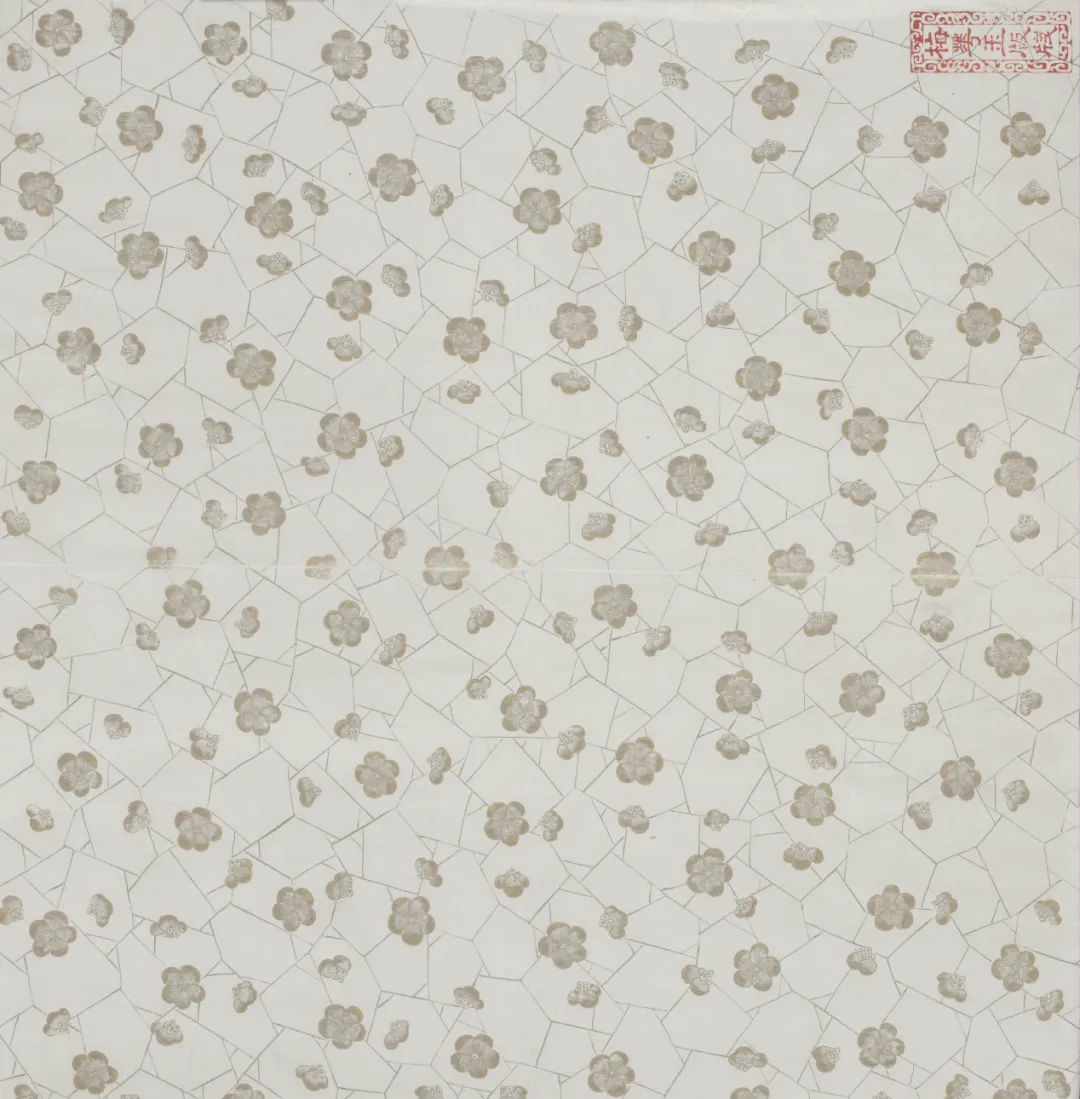
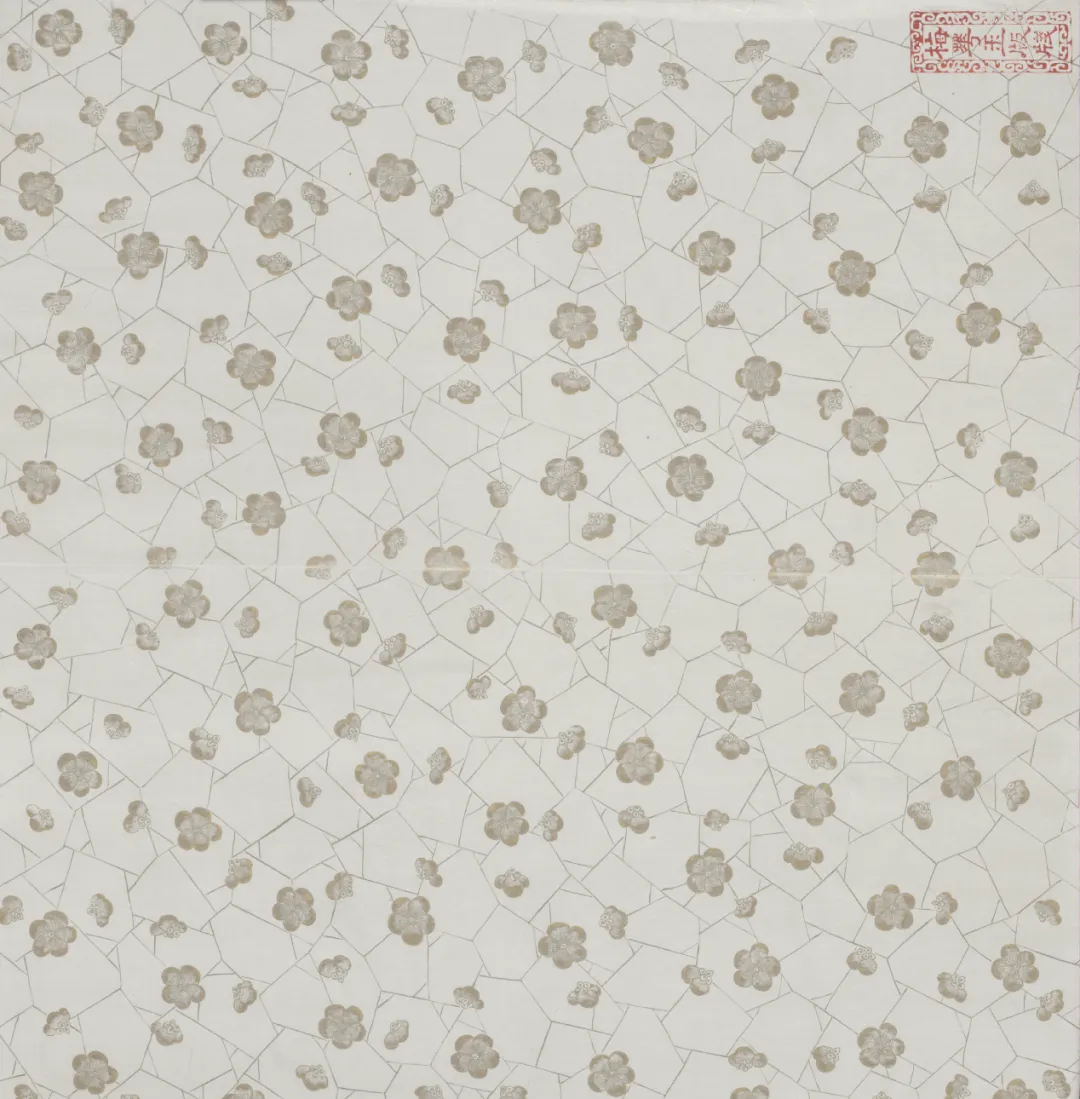
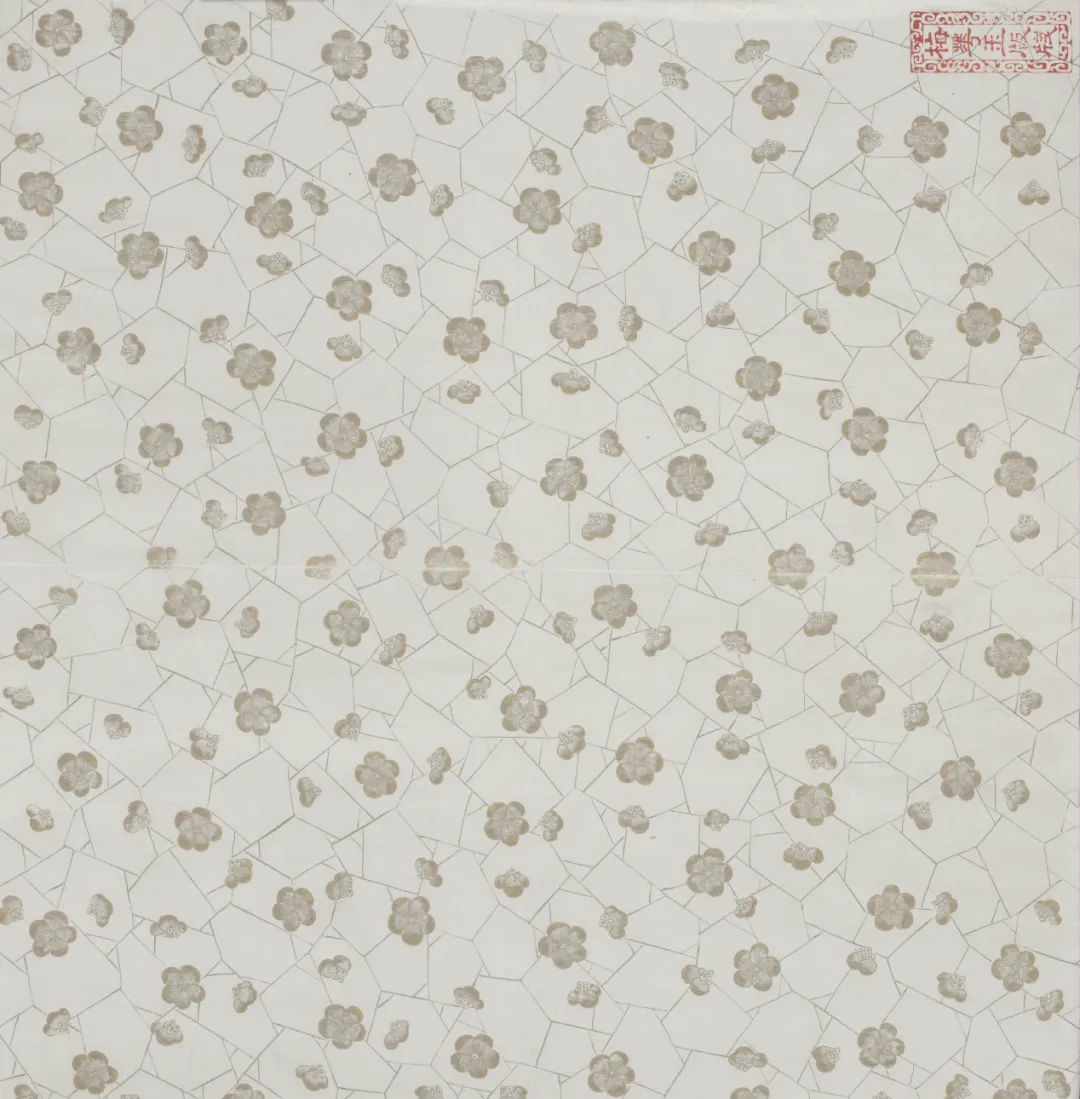
A Qing Dynasty Qianlong period plum blossom jade-patterned paper, 49.1cm × 51.3cm, collection of the Palace Museum.
The development of Chinese stationery is not only a history of advancements in printing technology, but also a history of generations of literati's conscious pursuit of beauty. The exhibition vividly outlines the thousand-year journey of Chinese stationery from simplicity to splendor. From Xue Tao's creation of "Xue Tao paper" in the Tang Dynasty, which initiated the trend of private stationery making, to the gradual refinement of categories such as embossed paper in the Song and Yuan Dynasties.
Among the exhibits is the *Shizhuzhai Jianpu* (Ten Bamboo Studio Letter Paper Manual), printed in the 17th year of the Chongzhen reign of the Ming Dynasty. Utilizing classic techniques such as "douban" (woodblock printing) and "gonghua" (arched flower printing), it employs multiple printing plates to repeatedly overlay each other, creating a richly layered and grading effect, making it a pinnacle of woodblock printing. Other precious items from the Qing Palace collection include the "Plum Blossom Jade Plate Letter Paper" and the "Pink Imitation Ming Ren Dian Gold-Painted Ruyi Cloud Pattern Powder Wax Letter Paper," both exquisitely crafted. The exhibition will also highlight *Beiping Jianpu* (Beijing Letter Paper Manual), co-edited by Lu Xun and Zheng Zhenduo, a monumental work hailed as "the only monumental achievement in the history of Chinese woodblock printing."
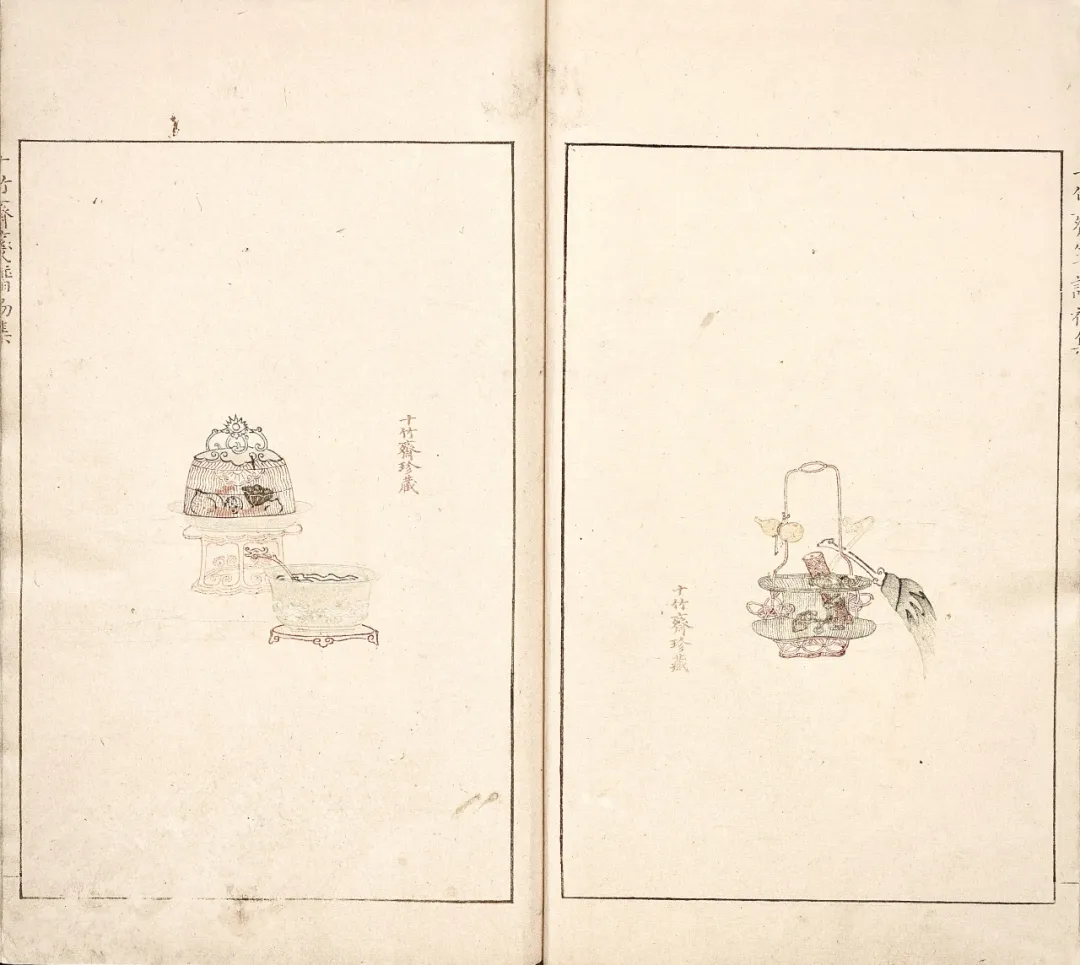
The first volume of "Ten Bamboo Studio Letter Paper Collection, First Collection" (Ming Dynasty, Chongzhen era), 27.1cm × 17.2cm, is held in the collection of the National Library of China.
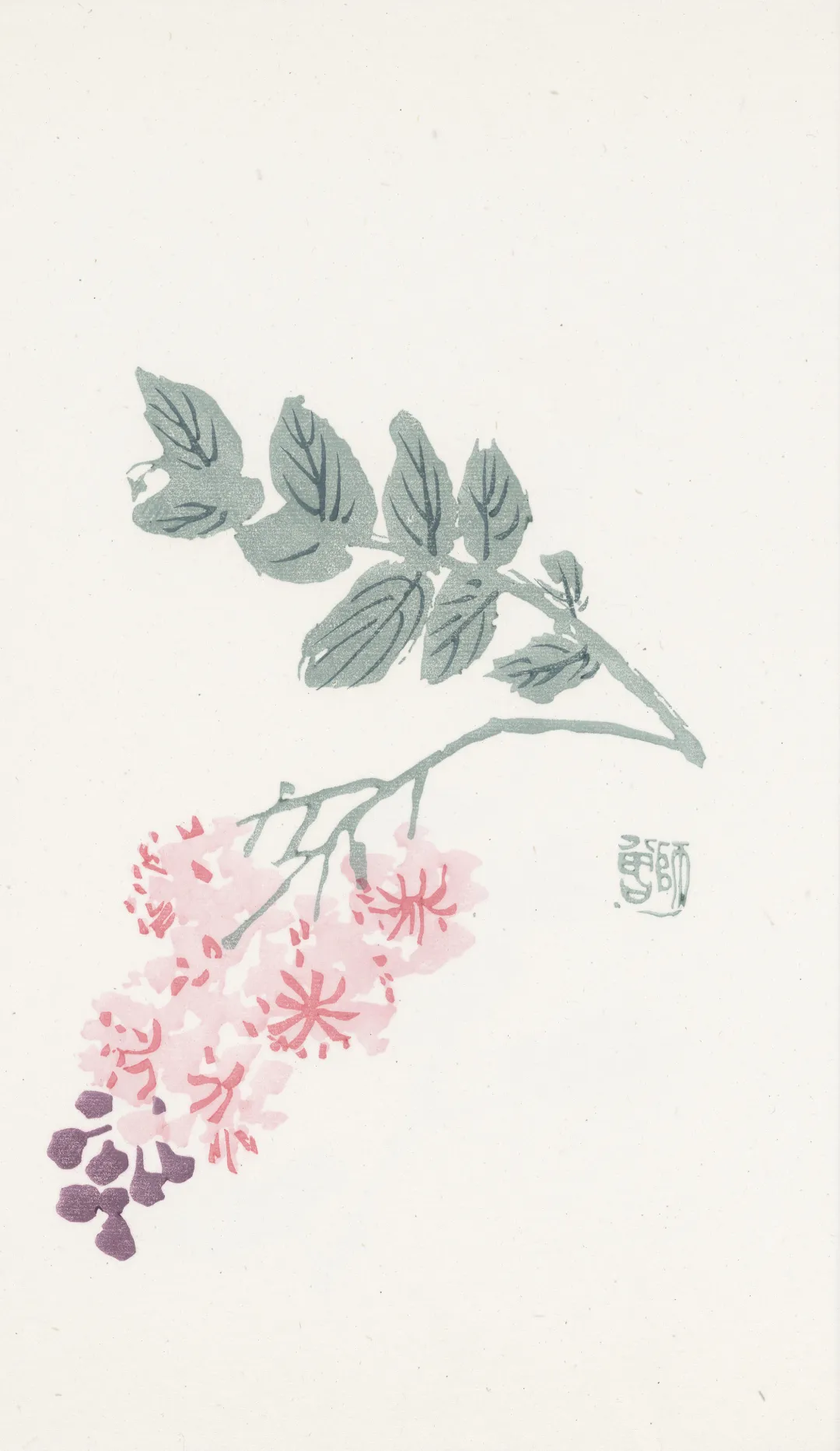
"Beiping Stationery Collection" (No. 7), 1933, illustrated by Chen Shizeng, 32cm × 22cm, collection of China Bookstore.
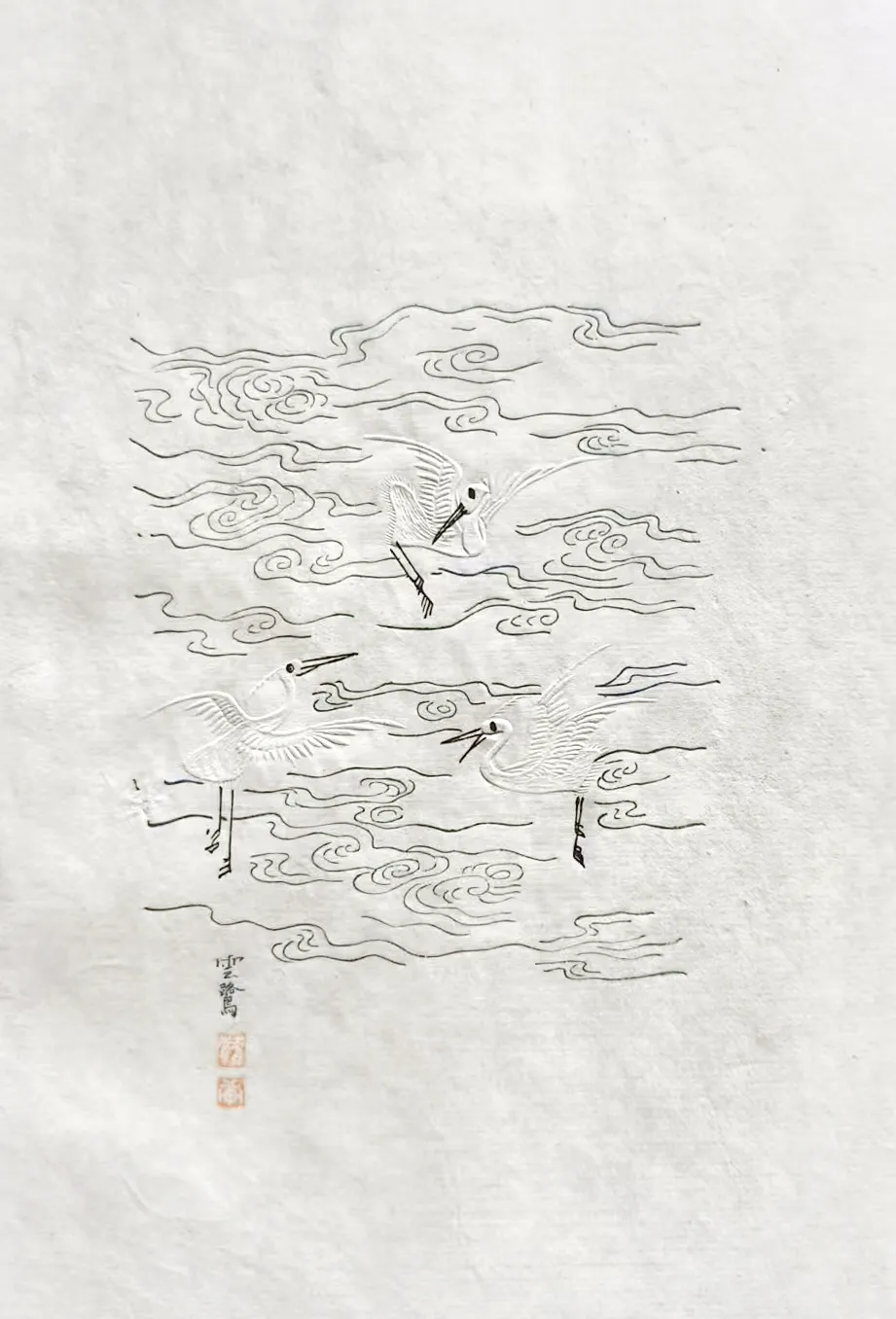
1981, *Luoxuan Biangu Jianpu* (Luoxuan's Collection of Ancient Letter Paper), Zeqi Jian, 32cm × 21cm, Collection of Suzhou Public Cultural Center.
To allow visitors to directly experience the craftsmanship behind the stationery, the exhibition features a special craftsmanship demonstration section. Through videos showcasing techniques, stationery-making tools, and woodblock printing, it vividly recreates traditional stationery-making techniques such as "arched embroidery," "douban," "burnishing," "sprinkled gold," and "ink gold." The subtlety of burnishing, the brilliance of sprinkled gold, the serenity of ink gold, the vibrant colors of douban, and the restraint of arched embroidery—these stationery-making techniques all embody the wisdom of Chinese artisans. Visitors can also touch these stationery papers up close, making them a tangible part of this artistic heritage.
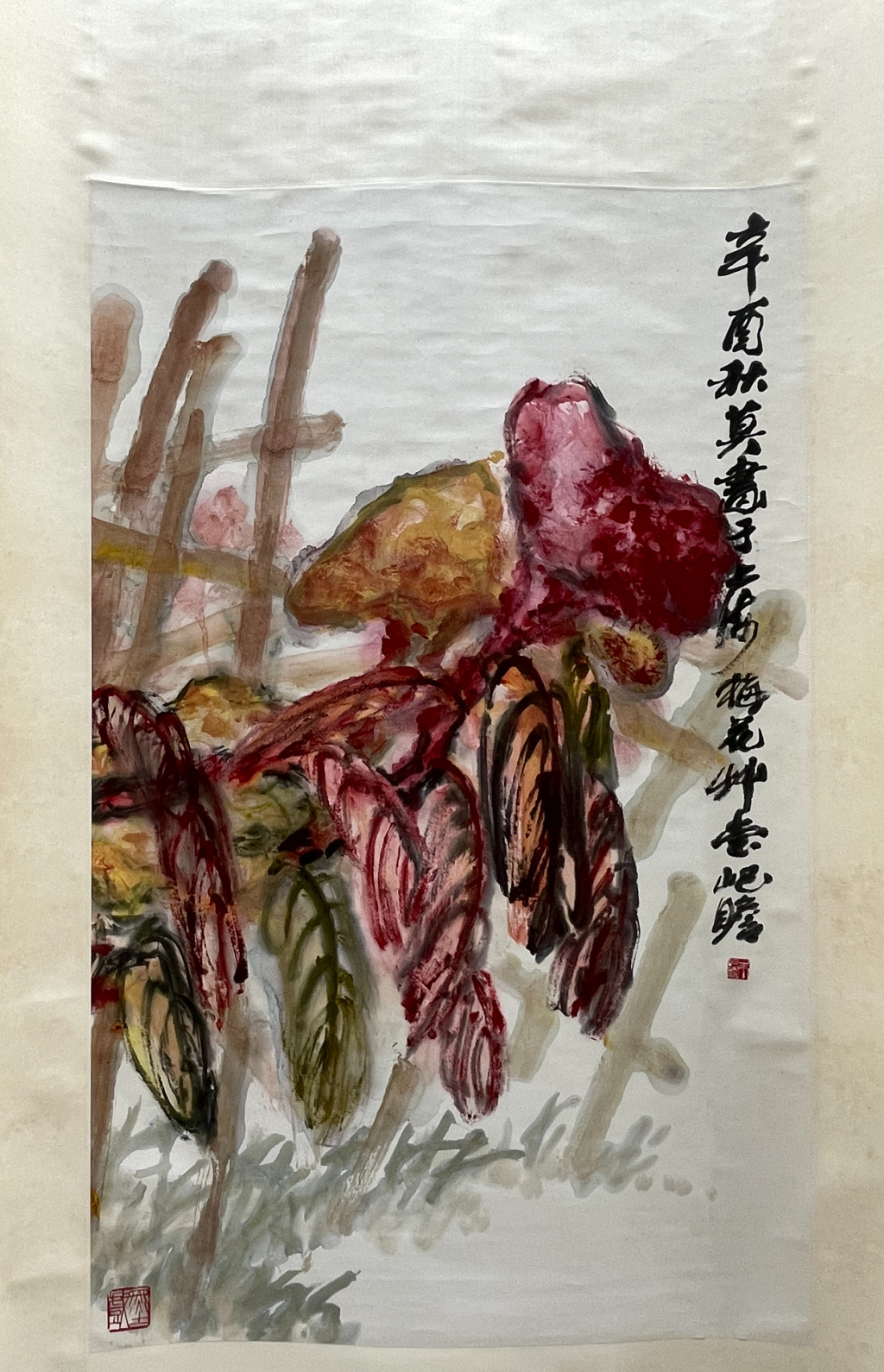
In addition, original manuscripts of stationery paintings by renowned Republican-era literati and painters such as Qi Baishi, Zhang Daqian, Yan Bolong, Ma Jin, and Chen Yuandu are also on display. Through the efforts of these artists, stationery became an art form integrating calligraphy, painting, carving, and printing. The exhibition clearly demonstrates that the selection of stationery paintings not only requires artistic conception and brushwork, but also must meet the needs of publishing and printing, embodying a unity of practicality and aesthetics, and a perfect combination of design function and form.
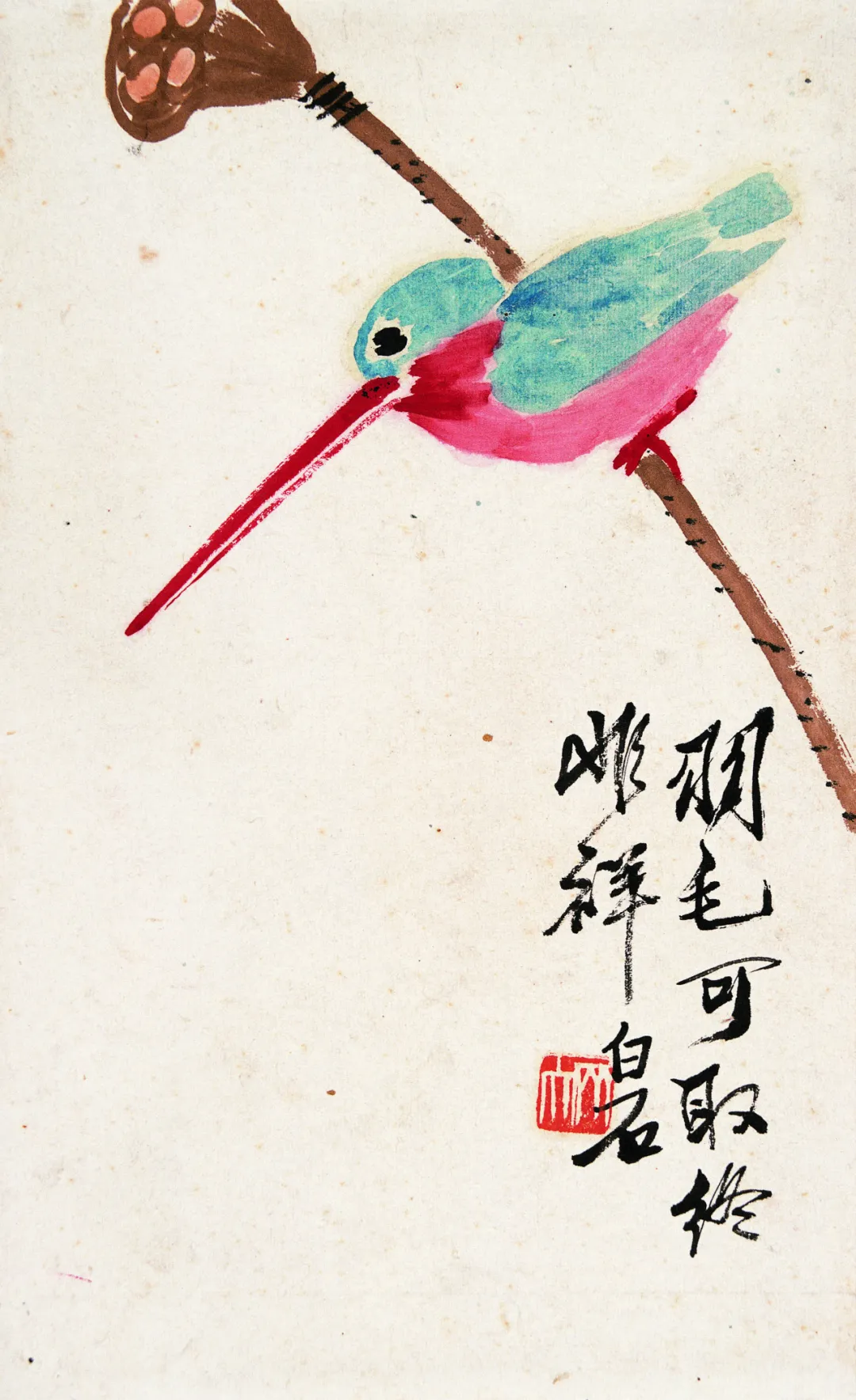
Qi Baishi's 23rd sketch from 1936. Qi Baishi, 28.2cm × 17.5m. Collection of Rongbaozhai.
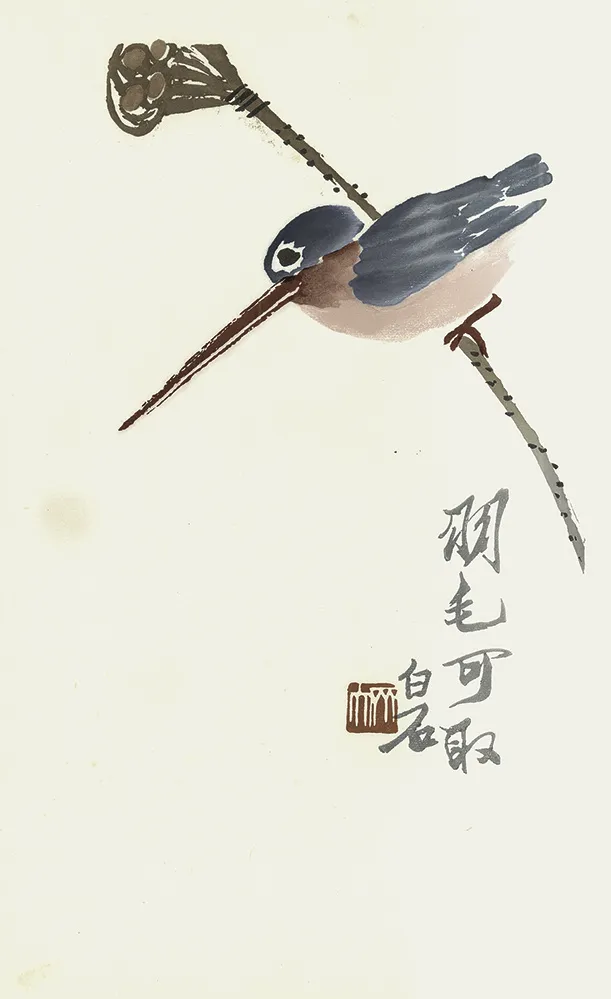
1955, *New Collection of Poetry Stationery from Rongbaozhai, Beijing*, Kingfisher Stationery, 31.2cm × 21.5cm, Collection of Beijing Academy of Painting.
The exhibition also displays letters from Pan Zuyin, a renowned official of the late Qing Dynasty, to famous figures such as Wu Changshuo, Shen Shuyong, and Zhao Zhiqian. Other precious documents include "Fo Tang Family Letters" by Yao Mangfu, a polymath of his generation, containing encouraging words to his son written on his collection of inscriptions on metal and stone. Furthermore, letters written by Qi Baishi to his disciple Yao Shiqian on stationery modeled after Bada Shanren's paintings, along with numerous letters from Republican-era literati to Qi Baishi filled with friendly interactions, constitute "Qi Baishi's circle of friends on stationery."

A collection of letters by Pan Zuyin, Qing Dynasty, 30.2cm × 34cm, Suzhou Museum.
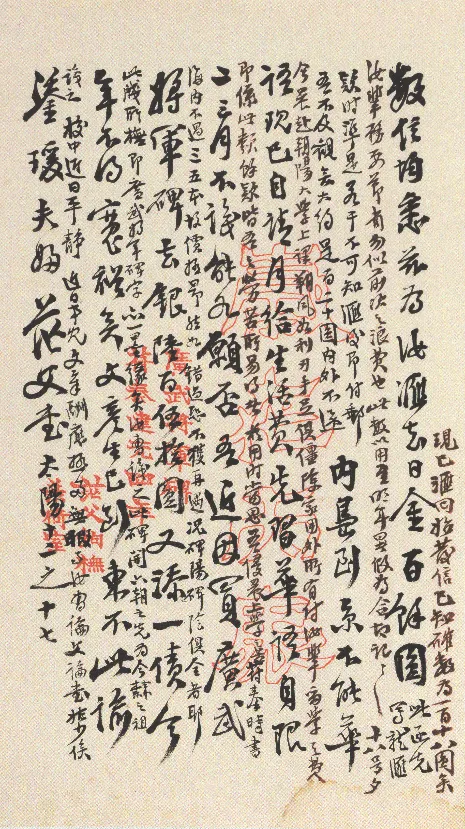
"Letters from Futang Family" by Yao Mangfu, 28.5cm × 20.5cm, Collection of Tsinghua University Art Museum
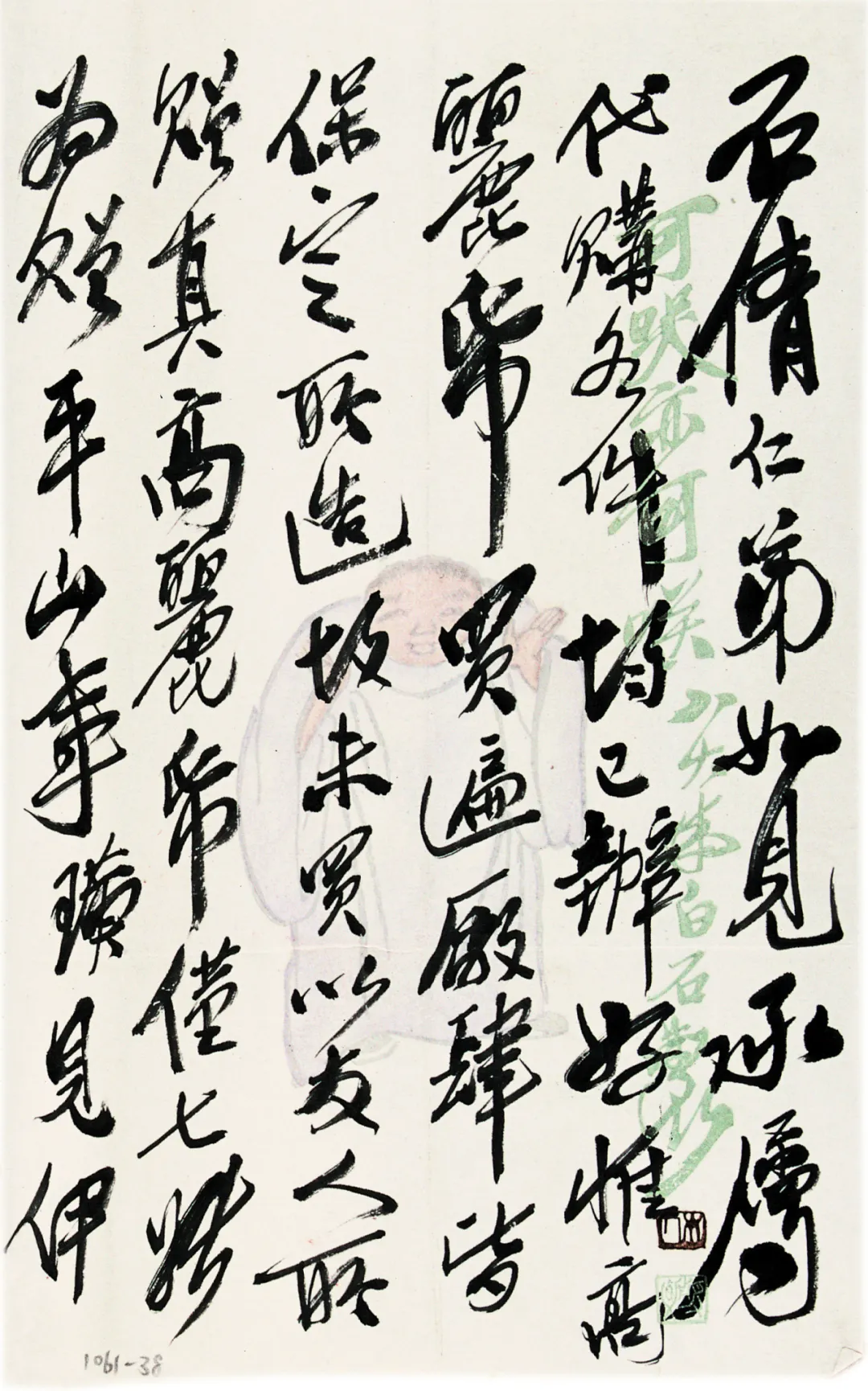
Letter from Binweng (to Yao Shiqian), 1933, Qi Baishi, 37cm × 38.5cm, Collection of Beijing Academy of Painting.
According to the organizers, the exhibition title, "Who Sends a Letter from the Clouds?", comes from Li Qingzhao's poem "A Spray of Plum Blossoms: The Fragrance of Red Lotus Fades and the Jade Mat is Cool in Autumn": "Who sends a letter from the clouds? When the wild geese return, the moon is full over the western tower." The exhibition will run until March 15, 2026.